Blog

Our Latest Blogs

which took place in Stockholm on 20–21 June. It was a valuable opportunity for us to reconnect, reflect and reimagine what we can achieve as a network.

This event was more than just a formal gathering; it was a true moment of exchange and shared vision. We focused on key themes such as employability, cultural exchange and international collaboration, discussing how international experiences can boost employability, build intercultural skills and strengthen global collaboration.

The active involvement of ESAA’s sister organisations strengthened the collective message: we are building a stronger, more inclusive and impactful network.

A powerful reminder from this meeting: mobility isn’t just movement: it’s transformation.

You can follow the work of our reporters on our social pages Instagram and TikTok.

The project is promoted by garagErasmus, University of Pavia and Gruppo SAE.

Our Network Manager, Carlo Bitetto, has presented ErasMAG to the EC2U Alliance, that is gathering at the University of Pavia.

The European Campus of City-Universities (EC2U) is a multi-cultural and multi-lingual Alliance consisting of eight universities from diverse regions of the European Union: the Universidade de Coimbra, the Gheorghe Asachi​ Technical University of Iași, the Friedrich-Schiller-Universität Jena, the Johannes Kepler Universität Linz, the Università degli Studi di Pavia, the Université de Poitiers (Coordinator), the University of Salamanca (Universidad de Salamanca) and the Turun yliopisto – University of Turku.

How to include, not only Erasmus, but also PhD students in the ErasMAG project, has been one of the topics discussed by the alliance.

Stay tuned for the press conference presenting the project, to be held at the University of Pavia on 14 October 2025!

#erasmag #erasmus #university #universityofpavia

Dreaming of a greener holiday? Start with these easy tips:

1. Respect culture and people

Every place has its own customs, and it’s always best to know them and show respect.

It’s a great idea to learn a few basic words in the local language.

2. Support local businesses

When you travel, choose local shops, guides and activities.

It helps the local economy while preserving the character of the place.

3. Use sustainable transports

Choose the most sustainable transport options, like public transport, whenever you can.

This reduces CO2 emissions and helps minimize the poor air quality that comes with mass tourism.

Let’s travel responsibly and leave a positive footprint this summer!

The two-day Assembly gathered representatives from across Europe and beyond for a dynamic programme of plenary discussions, thematic workshops, and collaborative strategy sessions. Topics ranged from sustainable leadership and diversity in mobility to innovative alumni engagement and cross-organizational cooperation.

garagErasmus contributed actively to the dialogue, sharing its vision for empowering the Erasmus Generation and deepening its longstanding commitment to supporting international talent. The Foundation highlighted the importance of synergy among ESAA partners and the need for strategic partnerships that can foster sustainable and inclusive mobility ecosystems.

By participating in the EMA General Assembly, garagErasmus reaffirmed its role as a catalyst for international cooperation and as a dedicated advocate for the values of Erasmus: openness, opportunity, and unity in diversity.

On the occasion of the 2024 Higher Education European Networking Summit and in collaboration with the European Commission, garagErasmus established two new Focus Groups.

The first is a Policy Focus Group composed of two members from the garagErasmus Secretariat, five representatives from gE4 local communities, and five representatives from higher education institutions (HEIs). This group will be responsible for shaping, promoting, and implementing strategic initiatives that support the organization’s mission to enhance educational outcomes across Europe.

The second is a Focus Group on European Universities Alliances which will be established to explore the functioning and impact of European Universities. It’s objective is to provide the Directorate-General for Education, Youth, Sport and Culture (DG EAC) with reliable insights into the real-world operations of these institutions. The group will examine how mobility budgets are allocated within standard university agreements and alliances, and assess the influence of being part of a European University Alliance on funding evaluations by National Agencies (NAs). This work aims to support evidence-based decision-making and improve policy implementation across the European Higher Education landscape.

It was a great opportunity to discover ASAF’s past year activities, as well as its future strategy to engage in internationalisation and mobility promotion all across the continent. garagErasmus seized the moment to strengthen its relationship with its partner organisations in its quest to valorise the Erasmus Generation in Europe and beyond.

Key Responsibilities:

  • Modern design: redesign the website with a clean, contemporary look that reflects the dynamic and innovative spirit of garagErasmus, while maintaining the Foundation’s official colors and branding guidelines.
  • Functionality: restructure the website so that it successfully displays our mission, network, resources, media, ongoing projects, events and news in a modern and clear way, while maintaining existing content. 
  • Accessibility: implement best practices to ensure the website is accessible to all users, including those with disabilities, adhering to the latest web accessibility standards.
  • Responsive: ensure the website is fully responsive, offering an optimal viewing experience across all devices, including desktops, tablets, and smartphones.

What we’re looking for:

  • Proven experience in web design and development, with a portfolio showcasing responsive and modern websites.
  • Strong understanding of accessibility standards and best practices.
  • Creativity and attention to detail in implementing the Foundation’s visual identity.
  • Excellent communication skills and the ability to work collaboratively with our team.

About garagErasmus Foundation:

Based in Milan, Vicenza and Brussels, garagErasmus Foundation (gE) is the professional network of the Erasmus Generation that aims at supporting the shaping of a better-integrated Europe. Our mission is to improve the lives of people who went through international study or work experiences by enabling them to access opportunities that could make their careers more impactful for the European community. 

Project timeline:

  • Application deadline: 08/09/2024
  • Selection of developer: 09/09/2024 – 10/09/2024
  • Initial consultation and project kickoff: by 16/09/2024
  • Design mockups submission: by the end of September
  • Development phase: September/October
  • Testing and bug fixing: October/November
  • Final review and approval: by the end of November

How to Apply:

If you have the skills and experience to bring our vision to life, we’d love to hear from you! Please send your CV, portfolio, along with a brief proposal outlining your approach to this project and a quotation, to job@garagerasmus.org

If you are going to the conference and would like to meet us to get to know better the gE network and its opportunities, please send an email to Fabrizio Bitetto or Valentina Presa.

This year’s conference theme is “En Route!,” and wants to highlight the hard work that propels our community towards a brighter future.

the University of Pavia and the University of Cyprus. Over three days, participants engaged in a series of sessions that addressed a wide array of topics and perspectives concerning sustainability.

The staff week was opened by a welcome speech of Prof. Kirk Junker, vice-rector for sustainability at the University of Cologne, who emphasised the importance of HEIs leading students into sustainable habits. He was then followed by Pamela Kilian, from the Sustainability Office of the University of Cologne, who showcased the university’s sustainability strategy and the pivotal role of the Office in driving these initiatives.

The following session, featuring an overview of the BRIGHTS project and the program for the week, was jointly presented by Martina Altea Bellinzona, BRIGHTS Project Coordinator from the University of Pavia, and Thilo Zimmermann, Head of Academic Networks & SDGS Projects at the University of Cologne. They outlined the project’s goals, the structure of the staff week, and the key outcomes aimed to achieve.

The final session of the day was held by Tobias Bartman, of the Green Office Movement, who presented the organization and set up a workshop by applying the Green Office Movement’s toolkit to establish green offices. He then proceeded to present the work of Students Oganising for Sustainability International, which supports student and youth groups globally to lead on sustainability and social justice.

The second day started off with Martina Altea Bellinzona presenting the work of the Office for Sustainable Actions (OSA) of the University of Pavia. She was then followed by Thilo Zimmerman who introduced UoC Global, which implements international projects at the University of Cologne, and was and was then joined by Dr. Ali Al-Bayati to present the DAAD LegalLead Projects which seeks to build up law clinics on female empowerment and good governance at Al-Nahrain University in Iraq and Cartage University in Tunis and is a promising example for an international projects adressed to SDG 5 (Gender Equality) and 16 (Peace, Justice and Strong Institutions)

The third session of the day saw Ilaria Corazza of the University of Turin, and editor of the Sustainability Report, presenting the Rete delle Università per lo Sviluppo Sostenibile (RUS) and delving into the importance of reporting. Prof. Drew Nelson of the University of Cologne then showcased his ongoing course concerning the SDGs and the new teaching methodologies that it involves.

The second day ended with Michela Cobelli and Chantal Ricciardi, from the International Mobility Unit of the University of Pavia, who showcased best practices of internationalisation, sustainability and networking in HEIs, and the Coimbra Group. 

The third and last day saw the participants learning about the Fair Trade Competence Center of the University of Cologne by Dr. Katharina Groene, and were taught about sustainability rankings by Luciana Sacchetti of the University of Bologna.

The staff week concluded with a visit to the UN Campus in Bonn, where participants had the opportunity to learn in depth about the importance of SDGs. 

Our new collaboration with the University of Trento will enhance our efforts to promote the #ErasmusGeneration’s values and improve mobility and education across Europe!

The University of Trento is renowned for its commitment to academic excellence and innovation, and we are thrilled to have them on board with us to create a better Europe together.

spiegano «che ci impone di prepararci a lasciare il nostro spazio». Un’eventualità che allarma non poco Elitlab, Onymous, Gfc, Regula, Inveneta – Walter Fantauzzi, Garagerasmus, Seay, Yupmedia, Officina sulle Nuvole, Mostrum e Francesco Zanotto.

Qui diverse startup innovative hanno trovato terreno fertile per crescere

Gli imprenditori ricordano lo sviluppo del progetto e i tanti eventi, corsi e programmi di accelerazione, «che hanno contribuito a creare una rete di relazioni e di sviluppo. Qui sono nate collaborazioni che spesso si sono trasformate in nuove aziende. Qui diverse startup innovative hanno trovato terreno fertile per crescere. Qui sono stati pensati progetti a medio e lungo termine. Qui hanno trovato sede laboratori universitari per ricerca e sviluppo. In breve, Elevator è una grande risorsa per Vicenza e il suo territorio».

Una risorsa che, però, ha richiesto grandi investimenti da parte dei soci, in particolare della famiglia Lovato, proprietaria dello stabile, che partita con il 48% delle quote nel 2019 (Simal, della galassia del gruppo Maltauro, ed Ensys, tra i cui fondatori c’è l’ex ad di Elevator Matteo Pozzi, avevano entrambe il 26%), è passata nel 2022 al 72%, con Ensys al 33% e Simal al 5%. Recentemente, a fronte di spese continue, la famiglia ha deciso di vendere lo stabile, del valore di 3 milioni di euro.

Necessari investimenti importanti

«I Lovato – spiega l’ex presidente Franco Scanagatta – hanno investito 900 mila euro per la ristrutturazione dell’immobile, che ha bisogno di continui interventi. La società, poi, continuava a perdere, quindi i proprietari hanno cercato un acquirente, pronti a regalare l’azienda, in caso fosse stata presentata un’offerta seria». Che, però, non è arrivata. E il clima all’interno della società ne ha risentito. «La famiglia – continua Scanagatta – ha quindi deciso per la liquidazione volontaria dell’azienda, pur intendendo tenere fede ai contratti stipulati, che arriveranno a scadenza». La porta a eventuali investitori non è chiusa. «Se arriva una proposta adeguata i Lovato sono disposti a trattare».

In un deus ex machina sperano gli imprenditori, che nella lettera aperta vogliono «condividere la nostra preoccupazione con le amministrazioni e con la comunità imprenditoriale vicentina, che senza dubbio hanno a cuore lo sviluppo dell’innovazione e della tecnologia condivisa». Così anche Pozzi, che in questi anni ha lavorato a stretto contatto con le startup.

«Nonostante il Covid – sottolinea – avevamo portato a casa risultati, con tutti gli uffici pieni, una quindicina di startup incubate, moltissimi eventi e corsi di formazione. Avevamo anche iniziato collaborazioni con il Comune, le associazioni di categoria e ospitato un evento del Cuoa, insomma Elevator è diventato un punto di riferimento per l’innovazione e questo avrebbe portato effetti positivi anche a livello economico, arrivando a sanare il passivo. Sarebbe un peccato perdere questo incubatore, speriamo che qualcuno ci venga in aiuto con un investimento o mettendo a disposizione una nuova sede».

Articolo scritto da Maria Elena Bonacini per Il Giornale di Vicenza.

On May 8, festivities began in the evening with an informal aperitivo and open discussion. Over drinks and conversation, people shared personal reflections on European identity – what it means to belong, and how that feeling often goes beyond borders or institutions. Our ErasMAG team – Kamila, Nitsa, Francisca, and Hannah – joined the conversation, listening and contributing our own thoughts on connection, shared values, and lived experience.

The following day, on May 9, was aimed at approximately 150 Lucchesi high school students, and consisted of a showing of the movie “The Spanish Apartment”. Introductory remarks were made by Marcello Pierucci, President of the Province of Lucca, followed by Luca Menesini and Kata Tüttő, member and president of the European Committee of the Regions, respectively. Moreover, final personal remarks were brought forward by past and present ERASMUS alumni, seeking to inspire and motivate the younger generation present in the crowd – not just to eventually embark on the adventure of studying abroad but also engage in core European values.

Our team of ERASMAG reporters had the opportunity to interview some of these young students present at the event and we were delighted by their outlook. When asked about the sentiments that they associate with Europe and the European Union, words like community, closeness, unity, and family were commonly used. Similarly, when inquired about the possibility of doing ERASMUS or any type of exchange program in the future, all pupils responded positively, showing great enthusiasm for the opportunity to meet new people, get to know different cultures, and learn new languages.

Looking back, the event in Lucca served as reminder of why these conversations matter. It created space for honest dialogue between generations of ERASMUS participants – past, present, and future. And it left us hopeful that more young people will take the chance to step into something unfamiliar and grow from it.

Kamila Aipakova, Nitsa Kokoladze, Francisca Lima, Hannah Svelling – ErasMAG Reporters

The initiative aimed to bring Erasmus+ opportunities closer to the youth of Torremolinos by involving students from two local schools, Erasmus+ students from the University of Málaga, and representatives from local Erasmus+ associations. Together, they had the opportunity to enjoy the unique experience of sailing in a barca de Jábega, a traditional boat of Phoenician origin, symbolising the values of mobility, inclusion, and intercultural exchange between communities, as promoted by Erasmus+ programme. The activity was made possible thanks to the collaboration of the Club de Remo de La Carihuela.

The project, supported by ESAA, has already received great feedback for its inclusive approach.

a Turkish youth organization founded in 2016 with the mission of empowering and supporting young people while making a positive impact in their communities. 

GEZIDER was established to support young people in conducting studies in the social, cultural, artistic, educational, and health fields. Its aims include encouraging experienced youth to mentor and guide other young people, contributing to the development of youth policies, and encouraging the entrepreneurial spirit among young people. The association also seeks to provide knowledge, skills, and attitudes in these areas, to reach out to young people across Turkey,  especially in provinces with limited opportunities, and to promote the sharing of experiences and life stories, ensuring that this knowledge and these skills are actively applied.

Moreover, the association carries out scientific, social and cultural studies in the fields of culture, arts, sports, science, individual and social development, tourism and employment at the local, national and international levels. 

garagErasmus is excited to welcome GEZIDER into its network and looks forward to the future initiatives we will develop together.

a Romanian youth organization founded in 2010 with the mission of empowering young people to create positive change in their communities. 

Although based in Romania, GEYC is active at the European level. It is the initiator and coordinating organization of the PRISMA European Network, a European wide coalition aimed at raising the quality of youth projects. Since 2023, GEYC has also held Special Consultative Status with the United Nations Economic and Social Council (ECOSOC).

With a focus on entrepreneurship and engagement, democracy and human rights, digital and sustainability, GEYC provides opportunities through educational projects primarily targeting young people aged 14–35, as well as youth workers and teachers.

garagErasmus is excited to welcome GEYC into its network and looks forward to the future initiatives we will develop together.

Under the slogan “Join the Learning Transformation,” NYH serves as a platform for personal growth, civic engagement, and community development. Focusing on education, democracy, ecology, and culture, NYH provides opportunities for young people (14-25 years old) and youth workers to participate in impactful projects, leadership initiatives, and international collaborations. While based in Tallinn, NYH operates across Estonia and around Europe through a strong network of partner organisations, reaching diverse communities and supporting youth engagement at local, national, and international levels.

garagErasmus is excited to welcome NYH into its network and looks forward to the future initiatives we will develop together. 

A brief recap of these days: the two-day training was designed to bring together representatives of our gE4Cities network to deepen advocacy and lobbying strategies, focusing on building self-funding capacities and long-term sustainability at the local level.

The training sessions included interactive workshops on effective communication, techniques, and practical approaches to developing strategies. Participants also engaged in case studies and group discussions that helped enhance their skills.

It was a training that saw active participation from our network. These were intense days full of idea exchange, discussions, and personal and professional development.

A big thank you to our trainer, Adéla Smejkalová, for her professionalism and expertise. Special thanks also to all participants and collaborators from all over Europe!

A big thank you also goes to Fabrizio Bitetto, President of garagErasmus, who took part in the event to introduce the garagErasmus organization and the next steps in our agenda, including the launch of garagErasmus’s new social media campaign, Fighting EuroApathy, designed to fight apathy towards European Institutions and reconnect citizens with the European Union.

This event was co-funded by Erasmus+ and the Erasmus+ Student and Alumni Alliance.

As every year, the event represents the perfect opportunity to strengthen the links between our partner foundations (universities, companies and local associations), to promote our work to our institutional stakeholders (National Agencies, European Parliament and European Commission) and to build new perspectives for the future of international students, trainees and young professionals.

Together with the National Agency for Erasmus+ en Fédération Wallonie-Bruxelles and ESN Belgium, we will also celebrate the end of the European Year of Skills, gathering professionals and testimonies by Erasmus+ students alike in a public conference, discussing the importance of soft skills and the new but impending need to properly validate them in today’s job market. 

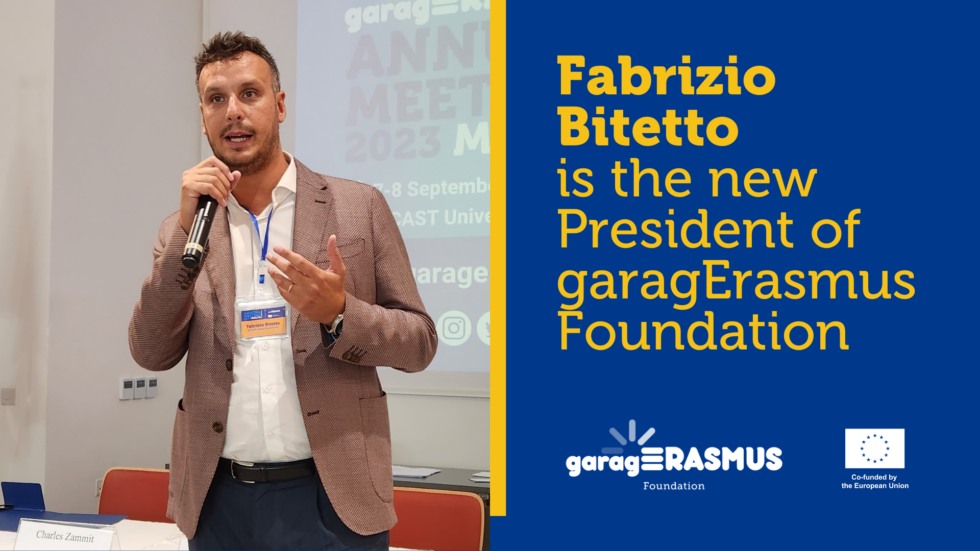
On 8 September in Malta, during the Annual Meeting 2023 of garagErasmus Foundation, Fabrizio Bitetto has been announced to be the next Board President of garagErasmus Foundation. Graduated in Urban Planning and Policy Design at the Polytechnic University in Milan in 2013, he was an Erasmus Student in Madrid in 2008.

Mr Bitetto has been Chief Executive Officer of garagErasmus Foundation since August 2017. During this period the Foundation has grown a lot, with more than 25 Universities Foundation members and 30 local associations all over the world.

Over the years he has played various important roles; for the 30 years of the Erasmus project he was appointed as Italy’s representative for the preparation of the “Erasmus + Generation Declaration” at European level. He launched many of the initiatives that today represent the Foundation at European level.

Another important appointment has gone to Carl Björkman, the new Chairman of the High Level Council of garagErasmus, an advisory forum that supports the development and promotion of the initiatives of the Foundation. Mr Björkman, already a member of garagErasmus board, is Head of Nordics at the Bill and Melinda Gates Foundation. Prior to that, he worked with the World Economic Forum, where he was Director and Head of International Organisations and Government Affairs. He has also worked for Bloomberg, Waterberry Development Organisation, the United Nations, and the European Commission.

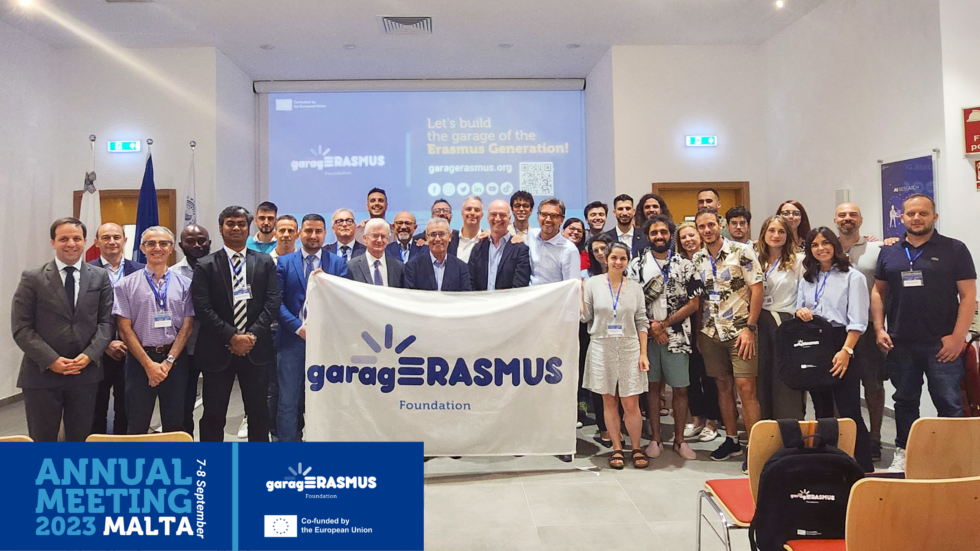
The garagErasmus XI Annual Meeting, held at the Malta College of Arts, Science and Technology (MCAST) University, kicked off with an insightful public conference in line with the European Year of Skills. Moderated by Carlo Bitetto, Network Manager of garagErasmus Foundation, the conference set the stage for a series of keynote presentations.

Francesco Cappè, President of garagErasmus Foundation, took the audience through the history of the organisation, underlining its commitment to promoting greater mobility, supporting a more open and integrated Europe, and introduced Fabrizio Bitetto as the next President of the Board.

Hon. Clifton Grima, Minister for Education and Sport, Malta, led a profound discussion on competences, emphasising the need for both practical competences and ethical values to be European citizens. He stressed that Erasmus and garagErasmus have a crucial role to play in developing these competences and values.

Charles Zammit, Chairman of Education Malta, spoke about Malta’s role as a prominent Erasmus destination and its commitment to supporting international education. He spoke about the Year of Skills and the opportunities it offers young people.

Tatjana Chircop, Deputy Principal Administration, MCAST, presented MCAST’s ambitious growth and wide range of courses.

David Fernandez Puyana, Permanent Observer of the United Nations University for Peace, spoke about the role of education in promoting mutual respect, understanding and peace. He stressed that Erasmus opens up new opportunities and plays a crucial role in conflict prevention.

Rose Anne Cuschieri, CEO of Malta Further & Higher Education Authority, presented guidelines for the recognition of non-formal education in Malta, the expansion and quality assurance of higher education in Malta and the value of informal learning. Both her organisation and garagErasmus share a common goal: the recognition of non-formal and work-based learning.

The conference concluded with the signing of an important Memorandum of Understanding between garagErasmus and the SAE Group, represented by Alberto Leonardis, head of the SAE Group, which marks a joint effort to give voice to the Erasmus generation through an ambitious editorial project.

Another important MoU was signed shortly after, when garagErasmus Foundation was pleased to welcome the city of Baku in its network of gE4Cities with the representative Elmar Guliyev, marking the creation of gE4Baku. 

The day also included the presentation of the garagErasmus Annual Report and Work Plan, followed by an interactive Q&A session. Discussions focused on strengthening the network and shaping the future of garagErasmus, including a thought-provoking discussion with Mr Evarist Bartolo, former Minister of Foreign Affairs and former Minister of Education, Malta. Mr Bartolo emphasised that addressing the skills gap should include a focus on values and ethics, as a narrow definition of skills is insufficient to address the significant challenges facing the EU.

Day 2  Friday, 8 September

The second day of the garagErasmus XI Annual Meeting started with the presentation of garagErasmus guests and gE4s, and continued with discussions on ErasmusCity and student housing. gE’s new president Fabrizio Bitetto and Maria Teresa Gullace, Researcher at Politecnico di Milano and project manager of Home Of Mobile Europeans project, looked at the challenges and opportunities associated with student accommodation, an often underestimated but crucial aspect of international student life.

Maria Teresa highlighted the fundamental need for affordable and quality housing solutions for mobile students and stressed the importance of policies and regulations as the first approach to consider when addressing student accommodation. The role of universities in bridging the gap between students and the housing market was a key point of discussion. Participants also explored ways in which universities can work with associations that help students find suitable accommodation. The day concluded with discussions on gE’s mission, upcoming campaigns, sharing of best practice and plans for future meetings.

In conclusion, the garagErasmus XI annual meeting served as a platform for meaningful dialogue, cooperation and sharing of best practices in international education. It brought together gE members, educators, policy makers and Erasmus alumni who are committed to promoting international education and fostering a more integrated Europe. As garagErasmus looks to the future, it remains steadfast in its mission to empower the Erasmus generation and shape the future of international education.

Together with our members from all over Europe, we’ll celebrate the Year of Skills 2023.

On  7-8 September, we will give the opportunity to discuss the importance of this Alliance in the lives of young working people.

The event is the perfect opportunity to strengthen the links between our partner organisations (universities, companies and local organisations) and to present our work to our institutional stakeholders (NAs, European Parliament and European Commission).

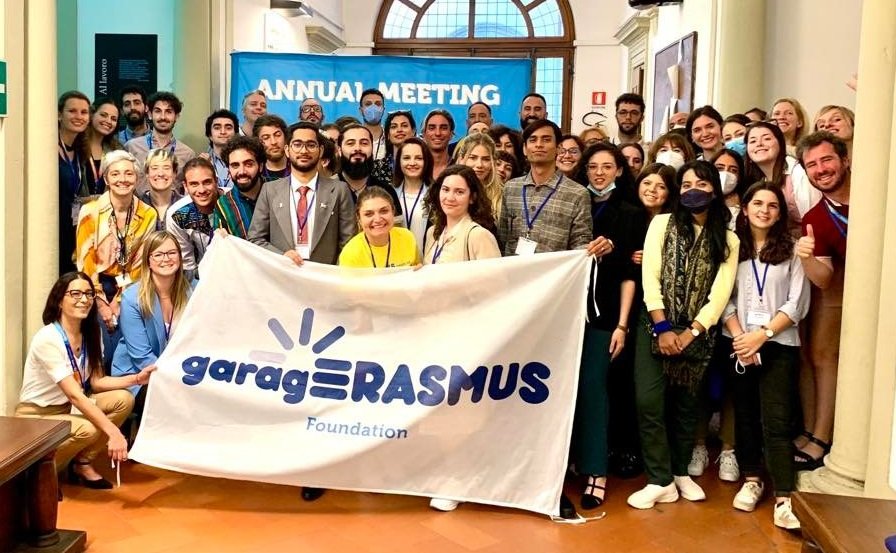
The annual meeting of garagErasmus took place in Florence from the 8th to the 10th of May 2022, during the occasion we also celebrated the 35th anniversary of the Erasmus+  programme and the 10 years of the Foundation!
Almost 100 people representing institutions, universities, partner associations, local chapters and Erasmus students and Alumni gathered to celebrate the 10 years of the garagErasmus Foundation.

The festival of Europe offered the perfect scenario to grow and showcase garagErasmus network activities, to present its annual work to institutional interest groups and to create new opportunities for the future of the Erasmus Generation.

In fact, the aim of the event was to create stronger ties among our partners and share ideas and information about ongoing projects.  garagErasmus’ annual report highlighted both the flagship projects, such as the plus of Erasmus and the EU funded projects garagErasmus is currently working on, such as Handshake, SustainEu, Brights and EDU2030: Youth in Transition. Moreover, garagErasmus team was also glad to share with its members the developments of its new flagship project gEcity currently under construction in Milan and its ambitious plan to scale up the project by opening 5 new gEcity in the next decade.

Special attention was drawn to the final conference of the Euthpages for Europe project funded by the European Parliament where gE hosted EU representatives and young ambassadors to present the results of 25 local events held all around Europe and to discuss how to give continuity to the impact of the Cofoe and to keep shaping the future of Europe together.

During the open discussion, participants stressed the importance of strengthening synergies among our network to actively involve universities and existing local chapters and to reach out to new potential members.

We therefore decided to open a space for cooperation and collaboration organised in three working groups that will work together in the following months on three core European issues such as Youth civic Engagement, the future of EU Job Market and the Digital Transformation of EU Education. The working groups will allow our members to meet regularly and exchange expertise and knowledge to eventually create future projects together.
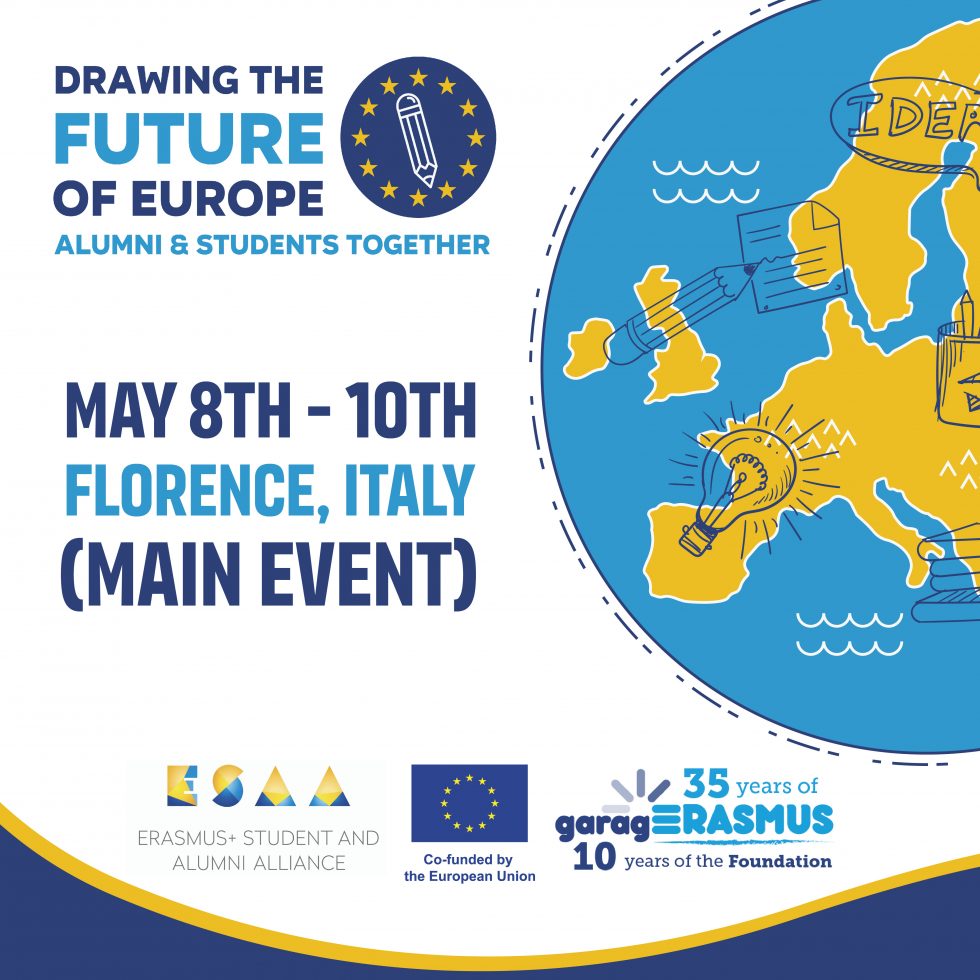
Furthermore, some of the most motivated youngsters of the Erasmus students and Alumni Incubator volunteered to open new g4s in Europe and beyond. gE4 Budapest, gE4 Tiblisi, gE4 Wroclaw and gE4Tirana will soon enter garagErasmus members network!

The attendees could also share some ideas on garagErasmus’ role within the Erasmus+ Student and Alumni Alliance (ESAA)  in order to work together on grants and EU projects and. Friends of gE and partner organisations such as Centro Studi Internazionali (CSI), Europiamo, Scambi Europei, Erasmus Student Network (ESN) and Organisation for Cooperation and Exchange And Networking among Students (OCEANS) also shared their work and plans for future cooperation.
The annual meeting was also the occasion to celebrate, together with the Italian national agency INDIRE, the 35th anniversary of the Erasmus+ programme. Throughout Sunday we welcomed several students and children to our stand in Piazza della Repubblica promoting the Erasmus Programme and its exchange opportunities. On Monday morning we attended INDIRE’s Conference on the success stories of the Erasmus programme.

The conference has been a success for garagErasmus as well, as the Major of Firenze Dario Nardella directly engaged in a long and inspiring conversation with our Erasmus students and alumni.

Annual Meeting Gallery

Our EUTH Pages project will be officially closed on May 9th in the framework of the celebration of the Festival of Europe.

Join us and get to know the ideas and experiences of our young people to build together the future of Europe.

We are happy to announce that from the 8th to the 10th of May, a group of successful Erasmus students will have the chance meet highly qualified Erasmus Alumni and young professionals within a 3-day training incubator.

The project is supported by the European Commission through The Erasmus+ Student and Alumni Alliance.

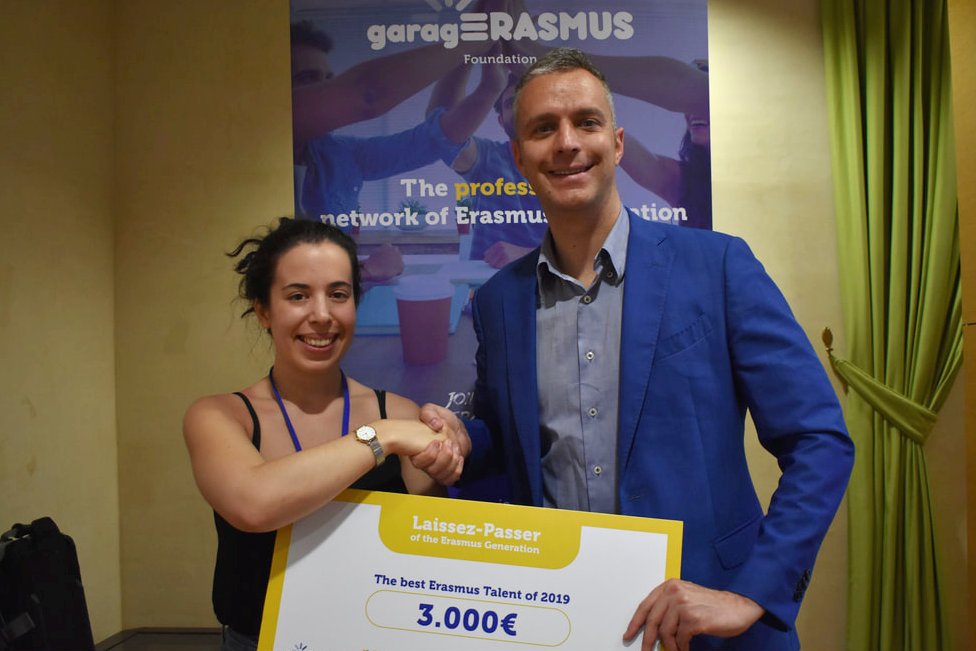
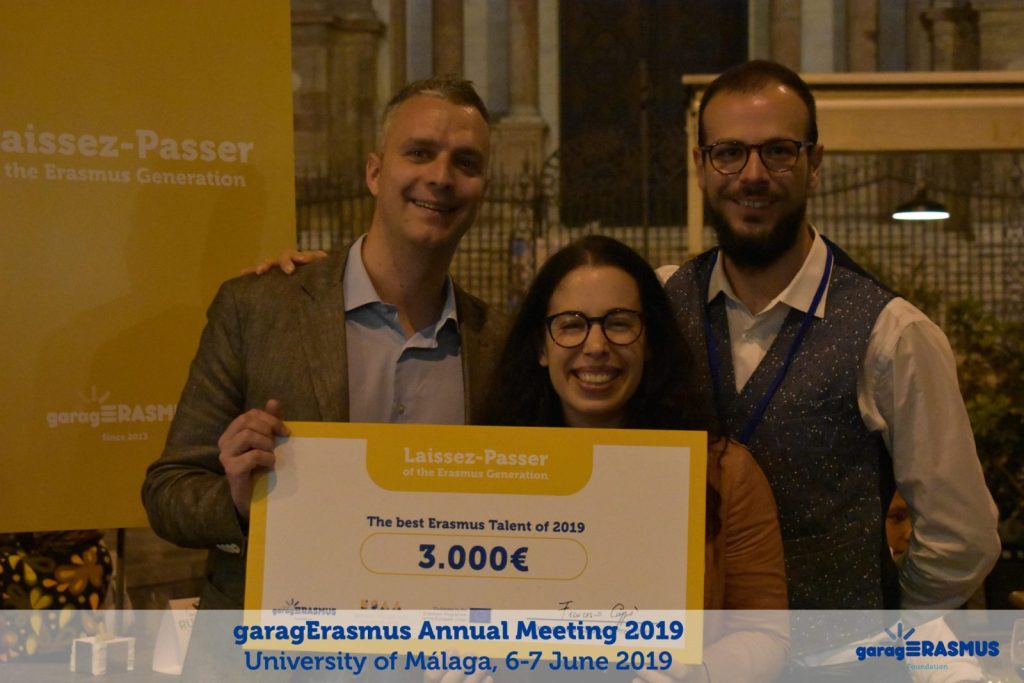
  • During the event Orsolya Réka Süli was recognised as the best talent of the Erasmus Generation (Golden Laissez-Passer). Her project, seeking to address the climate impact of our daily purchases, will develop a database gathering information on the environmental impact of a wide range of food products.

During the Annual meeting participants stressed the importance of synergies between universities, companies, cities and associations to improve the career of young professionals. Furthermore, it was the perfect scenario to strengthen links among garagErasmus network members, to present its annual work to institutional interest groups (National Agencies and European institutions) and to create new opportunities for the future of the Erasmus Generation.

In fact, the aim of the event was to create stronger links among our partners and share ideas and information about ongoing projects. Participants to the meeting were mainly representatives of European universities, young entrepreneurs and members of our network.

garagErasmus’ annual report and last year’s flagship projects, such as the International Talents Match or Laissez-Passer of the Erasmus Generation, were presented during the meeting, as well as the funded projects by the European Commission garagErasmus is currently working on, such as Erasmus Vote Power, SEND, EYVOL or IYE-LABS.

The attendees could also share some ideas on garagErasmus’ role as Erasmus Alumni network in order to work together on grants and EU projects and the next generation of the Erasmus+ programme.

The work of Erasmus+ Student and Alumni Alliance (ESAA) member organisations -Erasmus Mundus Association (EMA), Erasmus Student Network (ESN), Organisation for Cooperation and Exchange And Networking among Students (OCEANS)- and EuGen, among others, was also analysed.

The Golden Laissez-Passer award

The Laissez Passer award recognises with a symbolic passport European talents who have relevant mobility experiences – study or work -. Its winners are provided with benefits and opportunities in their professional careers.

On this occasion, Orsolya Réka Süli was the winner of the Golden Laissez Passer 2019 among all  the 600 projects presented on our platform. She will receive €3,000 to develop her idea.

Her project seeks to address the climate impact of our daily purchases by developing a database that will gather information on the environmental impact of a wide range of food products.

Orsolya also wants to develop a consumer solution to provide actionable information to consumers. She strongly believes that this experience will further equip her with necessary research experience in environmental issues, as well as grow my network of researchers.

These were the other 5 finalists who attended the meeting. We would like to congratulate them all for their outstanding projects:

  • Ioannis Ladeas, with his idea is to implement the project “Traveling for change” and create a short documentary film (documentary) focusing on how the EU, and particularly the Erasmus+ programme, is empowering refugees living in Europe.
  • Mahsa Samadi’s “Uccello” project seeks to create a unique platform for students who study abroad can meet the inquirires from local citizens in order to get some jobs.
  • Carolle Audrey Madiesse Lafo’s project to create a platform to facilitating Erasmus students to access a well-defined Learning Agreement. This platform will include the departments and courses studied in Erasmus countries divided into semesters, credits and if possible a timetable and the availability of the course.
  • Roberto Luca Saldi’s project to organize a campaign involving the Erasmus generation over the fight against Climate change with a two-day training: including debates with key stakeholders, to shape an Erasmus Green Act. 27 Erasmus talent will be selected, to build the Act and then spread it.
  • Federica La Mastra’s project is to create an online community to empower artists and create opportunities for theis success, a specialised platform for artists to connect with each other and showcase their work to others.

About garagErasmus Foundation

garagErasmus Foundation was founded in 2012 as the creative hub of the Erasmus Generation with the mission of improving the lives of people who had international study or work experiences by enabling them to access opportunities that can make their careers more impactful for the European Community. garagErasmus currently has 18 local associations (gE4Cities) and 30 member universities.

During its seven years of life garagErasmus has promoted initiatives such as the aforementioned Laissez Passer, speed networking sessions (“Talents Match”) or the online platform weTipp, where former Erasmus students, companies, universities, local authorities and associations can meet to share opportunities and promote joint initiatives.
​
garagErasmus is supported by the main institutions in Europe. Every year the European Commission invites 250,000 former Erasmus students to register on its online platform.

The platform will be the Conference on the Future of Europe’s central hub: a place where all the contributions to the CoFoE will be brought together and shared, including information on decentralised events, the European Citizens’ Panels, and Conference Plenaries, representing an opportunity for citizens to speak up, to say what kind of Europe they want to live in and to help to shape our common future.

Thanks to this new multilingual digital platform, citizens from across Europe will have the possibility to provide their views on any topic that they consider important for the future of the EU. This will enable citizens – for the first time at EU level – to put forward their ideas, comment on other people’s ideas, create and participate in events.

A specialised feedback mechanism will aggregate and analyse key points raised, so that they can also be taken into account during the European Citizens’ panels and Conference Plenaries.

The platform will also provide information on the Conference’s structure and work, as well as resources for event organisers including a catalog of key events through which they will be able to promote their initiatives at local, regional, national, and European levels. Citizens will easily be able to look up events in which they wish to participate thanks to an events map.

garagErasmus is contributing to success of the Conference on the Future of Europe through the EUth Pages for Europe project. Co-funded by the European Union, this project will develop a series of activities to make the Erasmus Generation have an impact on it through local events collecting youngster’s opinions and expectations and collecting them in a publication, the EUth Pages for Europe, addressed to EU policy-makers.

which will fund learning mobility (70% of the allocated budget) and cross-border cooperation projects for 10M European citizens with a budget of €26.2 billion (compared to €14.7 billion for 2014-2020), complemented with about €2.2 billion from EU’s external instrument.

This date, which corresponds to the 64th anniversary of the Treaties of Rome, marks also a restarting point for the most emblematic EU programme, and garagErasmus Foundation is ready to have a leading role in it, working towards a greener, more digital and more inclusive Europe.

The new Erasmus+ programme will be even more inclusive by supporting the green and digital transitions, as set out in the European Education Area, and will also contribute to the resilience of education and training systems. The new programme will offer new opportunities and hopes for all the European citizens to recover from a pandemic that especially hit their educational and professional development, particularly in the case of the Erasmus Generation.

As stated by the Commissioner for Innovation, Research, Culture, Education and Youth, Mariya Gabriel, “the fact that the Erasmus+ budget for the next seven years has almost doubled shows the importance given to education, lifelong learning and youth in Europe. Erasmus+ remains a unique programme in terms of its size, scope and global recognition, covering 33 countries, and accessible to the rest of the world through its international activities”.

What will be the features of the new Erasmus+ 2021-2027 programme?

1. Inclusive Erasmus+

It will provide enhanced opportunities to people with fewer opportunities, including those ones with diverse cultural, social and economic backgrounds, and people living in rural and remote areas. Novelties include…
– Small-scale partnerships and use of simplified grants: it will be easier for smaller organisations, such as schools, youth associations and sports clubs to apply.
– The programme will also be more international at the time of cooperating with third countries, building on the successes of the previous programme with exchanges and cooperation projects around the world, now also expanding to sport and the vocational education and training sector.
– Individual and class exchanges for school pupils and mobility for adult learners.

2. Digital Erasmus+

The COVID-19 pandemic highlighted the need to accelerate the digital transition of education and training systems.

– The European Student Card will simplify & digitalise the implementation of the programme.
– Erasmus+ will support the development of digital skills, in line with the Digital Education Action Plan, providing high-quality digital training and exchanges via platforms such as eTwinning, School Education Gateway and the European Youth Portal, and it will encourage traineeships in the digital sector.
– New formats, such as blended intensive programmes, will allow short-term physical mobility abroad to be complemented with online learning and teamwork.

3. Green Erasmus+

The new programme will offer financial incentives to participants using sustainable modes of transport in line with the European Green Deal. Furthermore, it will also invest in projects promoting awareness of environmental issues and facilitate exchanges related to mitigating the climate crisis.

4. Erasmus+ for young people:

Erasmus+ will also support exchange and cooperation opportunities through new youth participation activities, to help young people engage and learn to participate in democratic life, raising awareness about shared European values and fundamental rights; and bringing young people and decision-makers together at local, national and European level. DiscoverEU now becomes an integral part of Erasmus+ and gives 18 year-olds the possibility to get a rail pass to travel across Europe, learn from other cultures and meet fellow Europeans.

Known as Erasmus+ since 2014, when it enlarged its scope of activities, this emblematic programme is ranked by Europeans as the EU’s third most positive result, just after free movement and peace. Over the last three decades, more than 10 million people have participated in the programme in 33 countries (EU plus Iceland, Liechtenstein, North Macedonia, Norway, Serbia and Turkey).

The consequences of the pandemic are threatening the enormous efforts carried out during the last few years to achieve equality in the job market, particularly among young professionals, and as the professional hub of the Erasmus Generation garagErasmus feels particularly concerned for young women’s opportunities.

Whereas the COVID-19 outbreak in Spring 2020 has been an opportunity for many companies and institutions to make giant strides towards digitalisation & remote working -changes that would have taken years have been implemented in just a few weeks-, female workers have suffered setbacks that have called into question the results of huge efforts over the last few years to achieve equality in the labour market.

In words of garagErasmus President Francesco Cappè , “The pandemia heavily tested our systems at all levels. The weakest elements of our society have been particularly affected. The mobility, which represented the essence of Erasmus’ existence has been interrupted and its culture with it. Today, on behalf of the garagErasmus Foundation, I would like to express our deep hope that the renaissance, that historically follows the darkest moments of our humanity, will be an occasion to reduce inequality of our societies, make our systems working smoother and fairer, and stop ignoring the disparity of treatments that women worldwide are receiving. We can not get back where we were simply because covid 19 highlighted, once for all, the inequality and unsustainability of our societies”.

The Erasmus Generation is peculiarly feeling the effects of the Corona crisis, which is especially devastating between young women, who are facing a double discrimination in this sense. EU institutions and national governments should devote particular efforts to support their employability through targeted policies, and the EU recovery plan must live up to its name by working for the Next Generation of Europeans.

According to the ILO-OECD paper “The impact of the COVID-19 pandemic on jobs and incomes in G20 economies”, “Early evidences confirm that, contraty to the 2008-2012 crisis, the COVID-19 economic crisis have negatively affected the job market prospects of women disproportionally”. In OECD countries, the rise of unemployment was superior among women (+3’7%) than among men (3’2%).

Furthermore, as reported by the 2020 Women in Work Index Report conducted by the consultancy firm PwC, the pandemic is causing a “shecession”, and estimates that progress for female workers could be back at 2017 levels by the 2021, and that in order to undo the damage caused by COVID-19 to women in work – even by 2030 progress towards gender equality needs to be twice as fast as its historical rate.

This International Women’s Day should especially pay tribute to women’s efforts at the forefront directly dealing with the pandemic. In Europe, women are more likely than men to be in occupations where there is a high risk of COVID-19 infection. Probably the best example is the health & social care sector, where nearly 80% of workers are women according to the 2019 edition of Eurostat. Medical doctors, nurses, personal care workers and other health professionals and their associates deserve special recognition, as well as female workers in the informal sector. Not to mention students & recent graduates with precarious jobs working in the service sector (such as tourism, education or childcare).
On the other hand, childcare facilities and schools closures likely amplified their unpaid work burden at home, where segregation of duties remains clearly unequal. Single parents, most of whom are women, are particularly vulnerable. Not to mention women suffering gender violence in their households. Therefore, garagErasmus considers that this day should be a reminder of the vital necessity to fight for gender equality, and invites the Erasmus Generation to stand up for women’s right to fully develop their professional potential.

Would you like to know more about this topic? We invite you to read “The gendered impact of the COVID-19 crisis and post-crisis period” report, carried out by the European Parliament in September 2020.

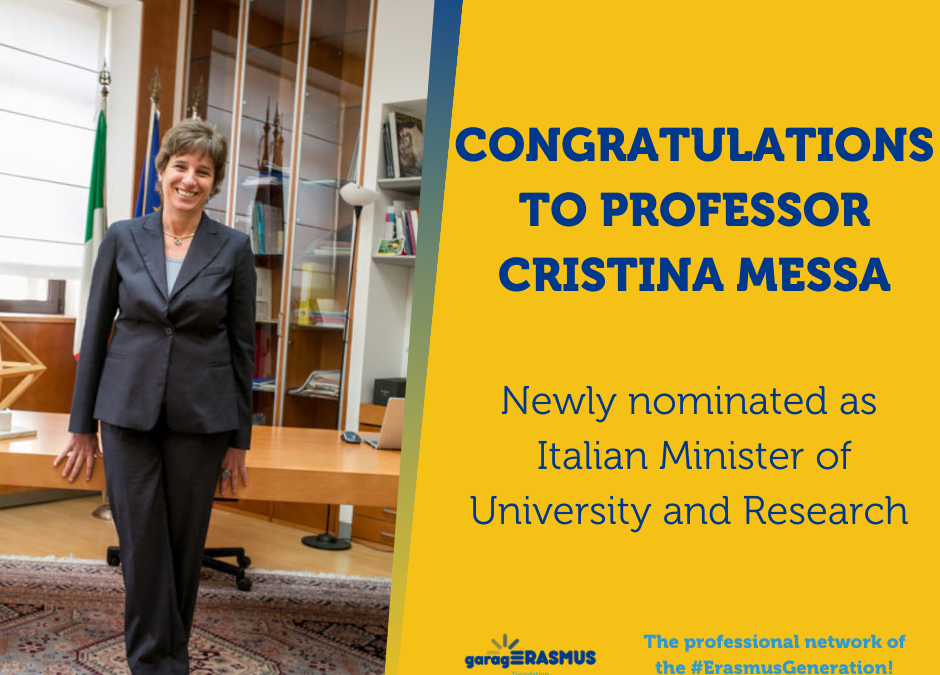
Professor Cristina Messa, former Rector of University of Milano-Bicocca, garagErasmus Foundation member, will be the Italian Minister of University and Research.

GaragErasmus Foundation is glad that a person of such great value has been chosen in this very delicate moment for Italy and for all Europe.

Good luck with your mandate!

_________________

La Fondazione garagErasmus accoglie con favore la notizia annunciata dal Primo Ministro, il professor Mario Draghi.
La professoressa Cristina Messa, ex rettrice dell’Università di Milano-Bicocca, membro della Fondazione garagErasmus, sarà il Ministro Italiano dell’Università e della Ricerca.

La Fondazione garagErasmus è lieta che sia stata scelta una persona di così grande valore in questo momento così delicato per l’Italia e per tutta l’Europa.

In bocca al lupo per il Suo mandato!

The new Erasmus+ programme will be more inclusive, more international, more digital and greener, and will intend at mobilising all sectors for economic recovery and growth.

There will be no structural changes with regards to the previous term, keeping the same division into key actions ans sectors. The new programme aims at these major milestones:

• New opportunities for European learners, starting at school; with greater accessibility and more flexible mobility formats, the new Erasmus+ will provide opportunities for a more diverse group of learners, including those with disadvantages;
• The possibility for students in VET to have experiences outside Europe;
• The introduction of “mixed” mobility, in particular through the use of innovative and high-performance digital tools;
• Green incentives for participants who choose to travel by train or bus rather than by plane and higher participation targets for non-EU countries;
• Promoting innovation in curriculum design, learning and teaching practices
• Promoting green and digital competences
Supporting new flagship initiatives, such as European Universities, Erasmus Teacher Academies, Centres of Professional Excellence and much much more!

The future programme will also focus on inclusion through increased financial support to raise accessibility and awareness among participants with fewer opportunities. Furthermore, it will also promote the incorporation of green practices in all its co-funded projects.

As a next step, the legal adoption of the MFF package along with the ratification of the Own Resources Decision is now urgently needed. Once adopted, the EU’s long-term budget, coupled with the NextGenerationEU initiative, will be the largest stimulus package ever financed through the EU budget. A total of €1.8 trillion* will help rebuild a post-COVID19 Europe.

Stay tuned for concrete updates soon!

The strong commitment to European cooperation and public investment demonstrated by its proposed allocation of 1.1 trillion euros, along with 750 billion euros for recovery instrument NextGenerationEU, is a positive sign for the future of Europe. Addressing the social and economic impact of the COVID-19 crisis, as well as the green and digital transitions, certainly requires ambitious public investment. In this regard, Europe cannot afford to leave people behind by failing to adequately channel such investment into funding programmes which have a tangible and positive impact on their lives while also helping to tackle the above challenges and contribute to the EU’s recovery. However, compared to the Commission’s original proposal from 2018, the revision surprisingly reduces the allocation to such programmes.

Set up in 2015 by the Lifelong Learning Platform and European Youth Forum, the Erasmus+ Coalition is an informal alliance of civil society and stakeholder organisations -including garagErasmus- with extensive experience in working with Erasmus+ and previous generations of the programme. Both organisations, together representing all categories of programme beneficiaries, coordinate dialogue between the EU institutions and civil society organisations across Europe. The Coalition meets regularly to discuss issues of common concern in the implementation of the Erasmus+ programme.

Stay Connected!

Follow us on social media and be part of the journey — updates, opportunities, and Erasmus vibes await!