Blog

Our Latest Blogs

which took place in Stockholm on 20–21 June. It was a valuable opportunity for us to reconnect, reflect and reimagine what we can achieve as a network.

This event was more than just a formal gathering; it was a true moment of exchange and shared vision. We focused on key themes such as employability, cultural exchange and international collaboration, discussing how international experiences can boost employability, build intercultural skills and strengthen global collaboration.

The active involvement of ESAA’s sister organisations strengthened the collective message: we are building a stronger, more inclusive and impactful network.

A powerful reminder from this meeting: mobility isn’t just movement: it’s transformation.

You can follow the work of our reporters on our social pages Instagram and TikTok.

The project is promoted by garagErasmus, University of Pavia and Gruppo SAE.

Our Network Manager, Carlo Bitetto, has presented ErasMAG to the EC2U Alliance, that is gathering at the University of Pavia.

The European Campus of City-Universities (EC2U) is a multi-cultural and multi-lingual Alliance consisting of eight universities from diverse regions of the European Union: the Universidade de Coimbra, the Gheorghe Asachi​ Technical University of Iași, the Friedrich-Schiller-Universität Jena, the Johannes Kepler Universität Linz, the Università degli Studi di Pavia, the Université de Poitiers (Coordinator), the University of Salamanca (Universidad de Salamanca) and the Turun yliopisto – University of Turku.

How to include, not only Erasmus, but also PhD students in the ErasMAG project, has been one of the topics discussed by the alliance.

Stay tuned for the press conference presenting the project, to be held at the University of Pavia on 14 October 2025!

#erasmag #erasmus #university #universityofpavia

Dreaming of a greener holiday? Start with these easy tips:

1. Respect culture and people

Every place has its own customs, and it’s always best to know them and show respect.

It’s a great idea to learn a few basic words in the local language.

2. Support local businesses

When you travel, choose local shops, guides and activities.

It helps the local economy while preserving the character of the place.

3. Use sustainable transports

Choose the most sustainable transport options, like public transport, whenever you can.

This reduces CO2 emissions and helps minimize the poor air quality that comes with mass tourism.

Let’s travel responsibly and leave a positive footprint this summer!

The two-day Assembly gathered representatives from across Europe and beyond for a dynamic programme of plenary discussions, thematic workshops, and collaborative strategy sessions. Topics ranged from sustainable leadership and diversity in mobility to innovative alumni engagement and cross-organizational cooperation.

garagErasmus contributed actively to the dialogue, sharing its vision for empowering the Erasmus Generation and deepening its longstanding commitment to supporting international talent. The Foundation highlighted the importance of synergy among ESAA partners and the need for strategic partnerships that can foster sustainable and inclusive mobility ecosystems.

By participating in the EMA General Assembly, garagErasmus reaffirmed its role as a catalyst for international cooperation and as a dedicated advocate for the values of Erasmus: openness, opportunity, and unity in diversity.

On the occasion of the 2024 Higher Education European Networking Summit and in collaboration with the European Commission, garagErasmus established two new Focus Groups.

The first is a Policy Focus Group composed of two members from the garagErasmus Secretariat, five representatives from gE4 local communities, and five representatives from higher education institutions (HEIs). This group will be responsible for shaping, promoting, and implementing strategic initiatives that support the organization’s mission to enhance educational outcomes across Europe.

The second is a Focus Group on European Universities Alliances which will be established to explore the functioning and impact of European Universities. It’s objective is to provide the Directorate-General for Education, Youth, Sport and Culture (DG EAC) with reliable insights into the real-world operations of these institutions. The group will examine how mobility budgets are allocated within standard university agreements and alliances, and assess the influence of being part of a European University Alliance on funding evaluations by National Agencies (NAs). This work aims to support evidence-based decision-making and improve policy implementation across the European Higher Education landscape.

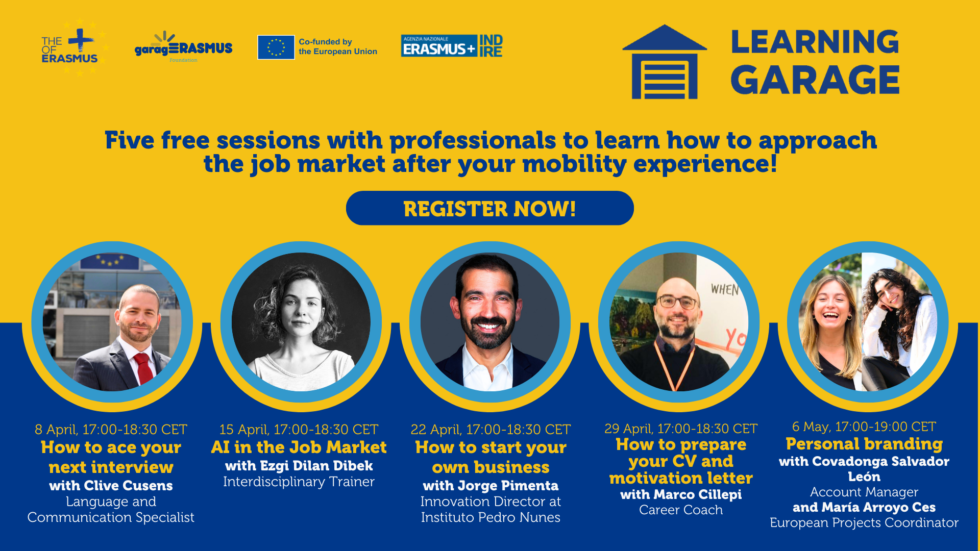
for present and former exchange students with entrepreneurs, career coaches, trainers and specialists of the job market with experience in the field of education.

The aim of these sessions is to provide the Erasmus Generation with job hunting and professional skills, also giving them concrete answers, suggestions and relevant tips on the current job market.

garagErasmus chose five “hot” topics for five talks on Zoom with professionals from all over the world who possess experience and knowledge in a specific field related to the job market. Participants will be able to raise their questions and feedback as the talks will be interactive.

Check out the five sessions:

  1. “How to ace your next interview”, Monday 8 April, 17:00 – 18:30 pm CET,  Clive Cusens (Online Business Developer at Innovators Club)
  2. “AI in the Job Market”, Monday 15 April, 17:00 – 18:30 pm CET,  Ezgi Dilan Dibek (Multidisciplinary Artist – Interdisciplinary Trainer)
  3. “How to prepare your CV and motivation letter”, Monday 29 April, 17:00 – 18:30, Marco Cillepi (Career Coach)
  4. “How to start your own business”, Monday 22 April, 17:00 – 18:30 pm CET,  Jorge Pimenta (Innovation Director at Instituto Pedro Nunes)
  5. “Personal branding”, Monday 6 May, 17:00 – 19:00, Covadonga Salvador León (Account Manager at Expedia Group) and María Arroyo Ces (European Projects Coordinator)

For more information or technical issues: communication@garagerasmus.org.

This activity is organised in the framework of “The + of Erasmus” project in collaboration with the Italian National Agency for Erasmus+ INDIRE

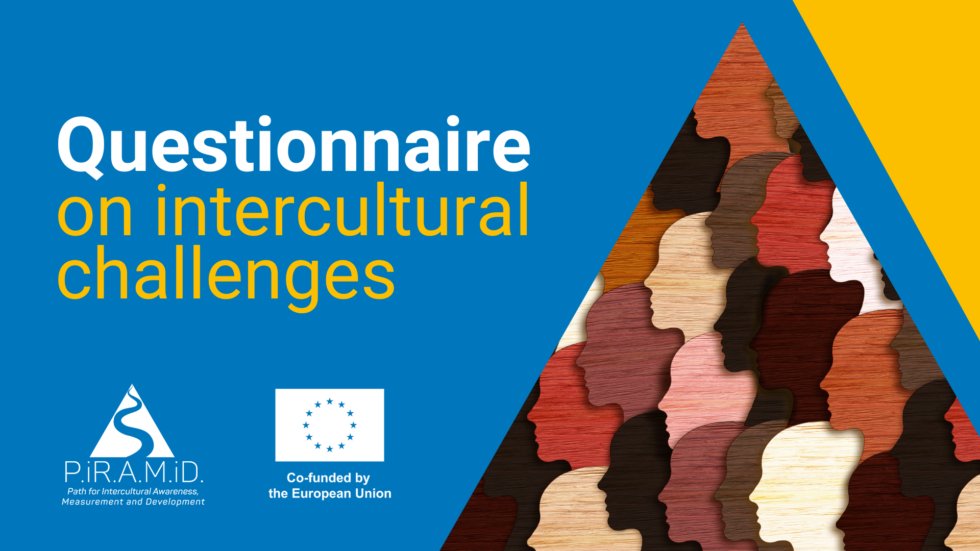
has published a questionnaire designed to explore the main difficulties faced by individuals when interacting with people from different cultures. This questionnaire serves as a first step in understanding the specific challenges faced by individuals in intercultural contexts.

Through this questionnaire, participants are encouraged to reflect on their personal experiences and encounters with cultural diversity, while also exploring the main difficulties encountered in these exchanges. It also gathers information on what people would prefer in terms of educational tools to improve their intercultural skills.

By gathering insights from a diverse pool of respondents, including VET students, teachers, tourism professionals and individuals from different cultural backgrounds, the questionnaire aims to provide a comprehensive overview of the intercultural landscape.

The results of the questionnaire will serve as a cornerstone for the development of training activities tailored to address the identified challenges and enhance the intercultural awareness and skills of the target groups.

In addition, the findings from the questionnaire will inform the development of assessment tools to measure intercultural competencies. By providing a systematic framework for assessing intercultural competence, P.IR.A.M.iD. aims to enable educational institutions, tourism companies and professionals to systematically assess and strengthen their intercultural skills.

This project is being implemented by: Tribeka Training Lab SLU, Elidea Psicologi Associati, garagErasmus ASBL, Balgarska Stopanska Kamara (Bulgarian Industrial Association, Agenzia Regionale LAB.

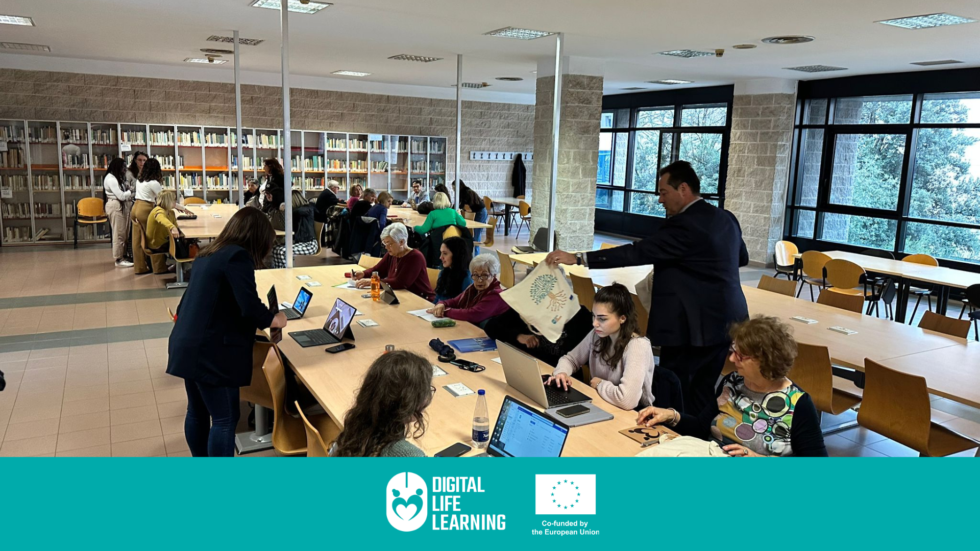
To be able to do so, the students underwent training by professionals on 26 February on technical expertise and effective teaching methodologies tailored for older learners. The initiative aims to enhance digital literacy among older adults, fostering social inclusion and connectivity within the community. Moreover, participating students can gain valuable teaching experience and receive certification upon completion, enhancing their credentials in the job market. By leveraging intergenerational learning, Digital Life Learning bridges the digital divide and builds a more inclusive society for all.

this two-day event aims to bolster the skills and capabilities of gE4Cities local groups. It will offer a valuable platform for knowledge exchange, networking, and collaboration among gE4s. To apply, please send an email to info@garagerasmus.org.

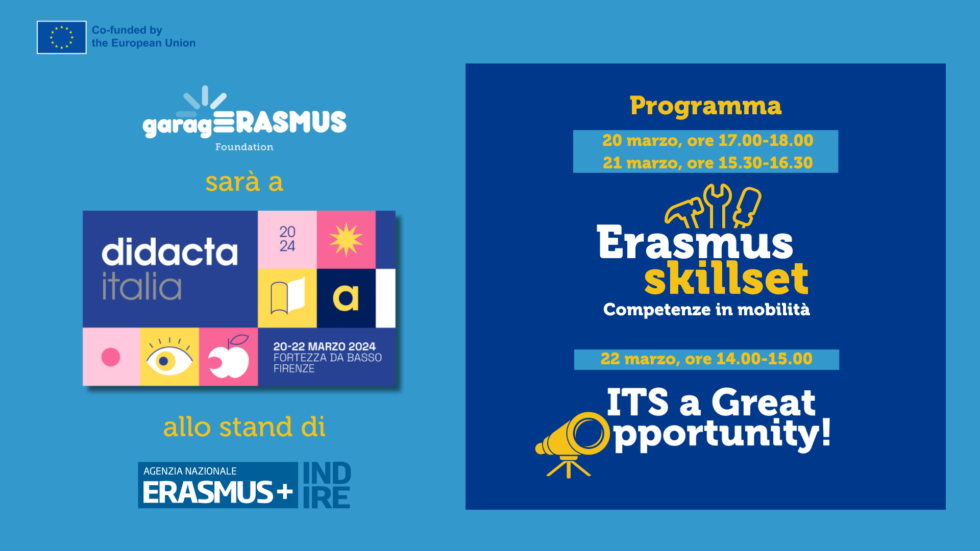
For the first time in its history,  garagErasmus Foundation will participate in the exhibition DIDACTA ITALIA, which will take place in Florence, Italy, from 20 to 22 March 2024.

DIDACTA ITALIA is the most relevant event on innovation and the future of education. Originally born in Germany, it is organised by Firenze Fiera, MIUR (the Italian Ministry of Education), Didacta International, Regione Toscana (the Tuscany Region), Comune di Firenze (the Florence Municipality), Unioncamere (the Italian Union of Chambers of Commerce), Camera di Commercio di Firenze (the Florence Chamber of Commerce), Destination Florence Convention Camp; Visitors Bureau, ITKAM (the Italian Chamber of Commerce for Germany), all forming the organizing committee, with the National Agency for Erasmus+ INDIRE as scientific partner.

The participation of garagErasmus is really important, since the Foundation has just launched several projects together with the National Agency for Erasmus+ INDIRE, aimed at strengthening relations between actors involved in internationalization processes as well as creating new opportunities for current and former exchange students. Among the projects recently launched we cannot fail to mention The Plus of Erasmus, the successful format dedicated to Erasmus students who have recently landed in Italy. Many of them are already taking part in the Accelerator, the online Italian language and culture course, started on 28 February in cooperation with the Dante Alighieri School of Recanati, Marche.

There will be three moments that will see garagErasmus protagonist during DIDACTA ITALIA 2024: first of all, on Wednesday 20 March, at 17:00 (CET) and on Thursday 21 March at 15.30, the event ERASMUS SKILLSET will be held, with the participation of some of the international students currently enrolled in the activities of The Plus of Erasmus. Participants will debate on the skills gained during their experience abroad, which ones can be successfully employed in the job market, and which ones can be improved. garagErasmus Foundation works every day on the so-called “Erasmusness”, to achieve the formal certification of these skills that are getting more and more crucial in the job market.

Finally, on 22 March, at 14:00, the new project ITS a Great Opportunity coordinated with the National Agency for Erasmus+ INDIRE will be officially launched. Its main objective is the dissemination of international opportunities offered by Higher Technical Institutes in High Schools.

garagErasmus Foundation is very proud of its cooperation with the National Agency for Erasmus+ INDIRE, which is, day by day, building new bridges and fostering live dialogues between educational actors: participation in DIDACTA ITALIA 2024 will be another important step in this direction.

__

Italian

Competenze e opportunità internazionali sono al centro dei tre momenti che vedranno la Fondazione protagonista allo stand di INDIRE

Per la prima volta nella sua storia, la Fondazione garagErasmus parteciperà alla fiera DIDACTA ITALIA, che si terrà a Firenze dal 20 al 23 marzo 2024.

DIDACTA ITALIA è l’evento più importante sull’innovazione e il futuro dell’istruzione. Nata in Germania, è organizzata da Firenze Fiera, MIUR (Ministero dell’Istruzione), Didacta International, Regione Toscana, Comune di Firenze, Unioncamere (Unione Italiana delle Camere di Commercio), Camera di Commercio di Firenze, Destination Florence Convention Camp; Visitors Bureau, ITKAM (Camera di Commercio Italiana per la Germania), che costituiscono il comitato organizzatore, con l’Agenzia Nazionale Erasmus+ INDIRE come partner scientifico.

La partecipazione di garagErasmus è importante, dal momento che la Fondazione ha appena lanciato diversi progetti insieme all’Agenzia Nazionale Erasmus+ INDIRE, con l’obiettivo di rafforzare le relazioni tra gli attori coinvolti nei processi di internazionalizzazione e a creare nuove opportunità per gli attuali e gli ex studenti di scambio. Tra i progetti recentemente avviati non possiamo non citare The Plus of Erasmus, il format di successo dedicato agli studenti Erasmus appena sbarcati in Italia. Molti di loro stanno già partecipando all’Accelerator, il corso online di lingua e cultura italiana, partito il 28 febbraio in collaborazione con la Scuola Dante Alighieri di Recanati.

Tre saranno i momenti che vedranno garagErasmus protagonista durante DIDACTA ITALIA 2024: innanzitutto, mercoledì 20 marzo, alle ore 17:00 e giovedì 21 marzo alle ore 15.30, si terrà l’evento ERASMUS SKILLSET, con la partecipazione di alcuni degli studenti internazionali attualmente iscritti alle attività di The Plus of Erasmus. I partecipanti si confronteranno sulle competenze acquisite durante l’esperienza all’estero, su quali possono essere impiegate con successo nel mercato del lavoro e quali possono essere migliorate. La Fondazione garagErasmus lavora ogni giorno sul concetto di “Erasmusness”, per ottenere la certificazione formale di queste competenze che stanno diventando sempre più cruciali nel mercato del lavoro.

Il 22 marzo, alle 14:00, invece, verrà lanciato ufficialmente il nuovo progetto ITS a Great Opportunity coordinato con l’Agenzia Nazionale Erasmus+ INDIRE. Il suo obiettivo principale sarà la diffusione delle opportunità internazionali offerte dagli Istituti Tecnici Superiori nelle scuole superiori.

La Fondazione garagErasmus è molto orgogliosa della sua collaborazione con l’Agenzia Nazionale Erasmus+ INDIRE che, giorno dopo giorno, sta costruendo nuovi ponti e favorendo il dialogo vivo tra gli attori del mondo dell’istruzione: la partecipazione a DIDACTA ITALIA 2024 è un altro importante passo in questa direzione.

Gli individui selezionati per il progetto, che dovranno aver frequentato un ITS e aver fatto un’esperienza Erasmus+, verranno fatti Ambasciatori del progetto a seguito di una formazione specializzata organizzata da garagErasmus in collaborazione con l’Agenzia, il Ministero dell’Istruzione e del Merito e le aziende. Una volta formati, gli Ambasciatori visiteranno le scuole secondarie per interagire direttamente con gli studenti, mettendo in evidenza i benefici degli ITS e le opportunità Erasmus, creando materiali promozionali come video incentrati su queste offerte.

Queste visite mirano a incentivare gli studenti a considerare le esperienze internazionali e la formazione professionale come opzioni valide per il loro futuro educativo e professionale.

Diventare Ambasciatori offrirà agli studenti numerosi vantaggi, tra cui:

  • Partecipare a una sessione di formazione esclusiva condotta da garagErasmus, dall’Agenzia Nazionale e dagli esperti del settore, dove potranno acquisire informazioni  preziose su altre opportunità di partire all’estero, come organizzare al meglio un evento e competenze comunicative;
  • Imparare strategie efficaci per promuovere con passione i loro ITS e condividere al meglio le loro esperienze Erasmus e incoraggiare altri studenti a partire.
  • Diventando un Ambasciatore, avranno un ruolo chiave nel creare una cultura che valorizza e promuove l’esperienza internazionale come parte integrante dell’educazione e della crescita personale.

All three co-founders are certified eduk8ers, they were used to organizing training events, workshops and they loved in-person interactions. But… a global pandemics happened. So they had to adapt. This article is an interview with all there and it is meant to inspire and motivate other gE cites to share their knowledge and experience with their communities.

Serena: Tell us about the Mentorship Summer Program that you implemented after the COVID-19 pandemics started.

Miruna: So our idea was to organize online mentorship sessions on topics that are familiar to each of us. My month was July and my beloved topic is forever and always entrepreneurship. I went for a 1to1 format and my mentee was Francisca, an amazing ESN member from ESN Unibucharest. The sessions were very personalized so we adapted the agenda for each meeting according to the questions and curiosities that better fit Francisca’s needs. We talked about finding your ikigai, your purpose in life. Then we built together a lean canvas for Francisca’s dream job and we went deeper into real-life steps of opening a company. In the last session, we actually celebrated the progress and we had some guests to share with us their experiences and personal stories. It was an incredible adventure for me and now I will let my colleagues tell you about theirs. But let’s see also what Francisca has to say about it:

“This mentorship programme has been a great chance to do some introspection and get to grips with how to start an entrepreneurial journey. The one to one sessions were really practical and my mentor provided me valuable knowledge and insights about the main steps on how to start a business. Miruna inspired me and showed me that there are other alternatives for “9 to 6 life”. You just have to be determined, learn and work for your dream as much as possible.” (Francisca, July Mentee)

Serena: What about August? Who’s month was it?

Diana: For me, the mentoring sessions held in August were one hell of a ride. Together with Alexandra, a member of ESN Cluj-Napoca, we dove into the basics of social media and digital marketing. This mentorship is very close to my heart, as both me and Alexandra come from similar backgrounds. We discovered we’re from the exact same small town in Romania and majored in the same area at university, so for me it was easier to mentor her, since I had a similar path, both educationally and volunteering-wise. As her primary goal was to understand what marketing was all about, we started with a broad presentation of it, from social media, to content and even a bit of digital marketing. I put together a list of resources for her to use further along: courses she can take up, people she can follow or newsletters she can subscribe to. We also talked about ikigai and how to find her purpose in life and she took a personality test. We finished the mentorship sessions with an online ceremony for Alexandra, together with my gE4Bucharest team members.

Here I can quote some of Andreea’s thoughts: The mentorship with gE4Bucharest was an amazing learning opportunity that allowed me to get some insights from the digital marketing and social media world and managed to spark my interest for this field even more. I am also very grateful to have met Diana who did a great job with our sessions and with whom I discovered to have many things in common. It was definitely one of the best highlights of the summer. (Andreea, August Mentee)

Serena: Wow! It really sounds like an intense experience. I think it was an incredible experience for you as well, as much as it was for Alexandra. What about you, Dora? I heard that your format was quite different from the ones chosen by the other girls.

Dora: For me, the September month of the Mentorship Program was a learning experience as well, considering that I had the chance to also try something new. During the past years, I understood one of the most important things is to know how to ask yourself the questions that will help you find your path. I think most of the people already had, or will have a point in their career when they feel lost, whether it is right at the start or later on. I chose to focus on career mentorship, because I had the feeling that, during my experience as a trainer, I learned more about the importance of asking the right questions, of introspection and self-assessment. We’ve been 4 young people who discussed about their fears, but also about what they are proud of. We took our time to answer questions about ourselves, but also to check what is suitable for us on the job market, following the new discoveries we’ve made. Now I am just looking forward to seeing how my three mentees will reach the stars.

As one of the participants said: This mentorship program has helped me go through a challenging time in my professional life. As a student who just finished their bachelor and chose to opt out of a master’s degree, while focusing on my internship, I was going through a lot of self doubt at the time. Choosing to take the time to participate in this program has helped me understand what I am good at, why the job I have is actually fit for me and how to learn to avoid the impostor syndrome related to my professional life. It also helped me reconsider my professional course and understand what steps I should take and what options I have along the way so that I would achieve success and get a job that would allow me to have a content and peaceful living. I would like to thank Dora and gE4Bucharest for the time and dedication to the program. It has helped me a lot and I wish there will be further installments of it so that more people can benefit from this mentorship. (Stefan, September mentee)

Of course, Octavia added her perspective on this activity: After a study mobility for one year in Bratislava and a couple of months of lockdown, I was completely lost. So this mentorship programme came as a breath of fresh air. Back then I was really in doubt about my future and what I am actually good at. I think the most important thing when participating in such projects is to be as open as possible, because it’s a pity to waste such an opportunity.

I would like to stress out also that the programme not only made me discover some hidden interests of mine, but also gave me the context to hear some motivational stories. In the end, you realise that not everything has to be black or white and that you are not the only one trying to find the right shade of grey. (Octavia, September mentee)

Serena: Thank you very much for your input, girls! I can notice that both you and the participants really enjoyed the experience and it is totally a thing all gE cites should try!

Would you like to know more about gE4Bucharest? Watch the video below!

The Katowice Internationals World Cup is the flagship event of the Katowice Internationals Foundation. This yearly event has the goal of promoting social inclusion and diversity through sport and multicultural integration in Silesia and Poland.

As a novelty this year, participants will have the chance to know the 20 participating countries a little bit better before the game. Their teams have made themselves known through their captains with a series of personal interviews to each one and with the objective to promote this big event that will have place on 17-18 October. 

You will find these videos on Katowice Internationals Foundation Facebook page. In addition as another novelty, we will celebrate this beautiful party in the amazing Stadion Śląski. Therefore, there is not excuse to not come this year!

The event is co-founded by ESAA and European Commission, with patronage by garagErasmus Foundation and Save The Dream.

The new office is easily accessible by metro (Maelbeek station) and bus (Trêves stop, lines 21, 27 & 64). Feel free to drop by our office, we will be pleased to welcome you & have a coffee.

he spoke passionately about the unique circumstances in which his garagErasmus story began. Konstantinos was the inaugural winner of the garagErasmus Laissez-Passer- a prize of 3000€ which can be invested into international projects. “How could my place within the garagErasmus community have started better?” he exclaimed.  

Konstantinos used the money to develop the WeAfriHug project with his team. The project, born from interacting with the inspiring people Konstantinos met on his travels across Sub-Saharan Africa, works by providing opportunities and resources to improve the lives of young African people. “Passion was there, willingness was there, potential was there…but opportunities and information were not!” he explained. For the past 2 years, his team has worked endlessly to deliver life skills seminars, an educational camp, and civil organisation training sessions across eight African countries. 

Through education, WeAfriHug successfully fosters the relationship between Europe and Africa. They have created eight partnerships between African and European universities and six between African and European NGOs. Additionally, they have already organised multiple Erasmus+ mobility opportunities for young African people in Greece.   

So, what can we expect from gE4 Athens in the new year? On top of further developments of the We AfriHug project, gE4 Athens are cooperating with ESAA organisations to implement a new project, #MindtheGap, which aims to empower the Greek youth to act as advocates for the European Union. The key objectives of this ambitious project are…

  1. To raise awareness of Erasmus+ and to inform youth about mobility opportunities, 
  2. To boost the capabilities of youth by providing the necessary tools for the 21st century, 
  3. To engage policy makers to support Youth Action.

Speaking as a true global citizen, Konstantinos explained: ‘My community is the world. I am not only concerned about the place that I was born and raised but for the world as a whole.” 

Well done gE4 Athens! Keep up the good work. We could not be prouder!

Gev spoke very fondly about the beginning of his garagErasmus story; “the day I became part of garagErasmus is very crucial to me; it opened up many opportunities. I soon realised there is a long way ahead with gE.” Gev was a finalist in the first edition of the Laissez-Passer. Although his proposal did not win, he was encouraged to establish the first gECity beyond EU borders and aim to implement his project anyway.

gE4Yerevan’s primary mission is to empower youths to achieve new professional and educational heights. They support young people by providing the necessary information about professional, cultural and educational development opportunities on both local and international scales.

This project, the Edu VanHub, was inspired by what Gev noticed during a separate outreach project carried out across rural Armenia. “I found out that young people living in rural areas are pretty much isolated; they are unaware of many opportunities which exist in education, art and culture” he explained. On returning home, Gev was determined to transform this bleak reality and, so, the Edu VanHub was born.

During the pilot phase of the project, 20 media workshops were conducted across 10 villages in rural Armenia. These workshops allow gE4 Yerevan to raise awareness of the mobility opportunities available and teach new skills. The results have been fantastic: seven participants now create video blogs; four were able to access a photography course for free; four now write media articles; and two have volunteered in gE4 Yerevan’s partner organisations.  Now, they also work online to maintain contact with those they have met and update them on new opportunities. 

In order to disseminate the vision, story and ideology of the Edu VanHub, gE4 Yerevan have so far travelled to six European countries. Now, gE4 Yerevan are implementing the Edu VanHub international phase in Ukraine; “We are super motivated to continue expanding the scale of the Edu VanHub project. The source of our motivation is the constant stream of positive feedback we receive from participants, parents, local authorities and the media.” They also plan to get involved in Erasmus+ youth exchange and ESC projects in the future.

Excellent work gE4 Yerevan! We wish you the best of luck for 2020! 

a Turkish youth organization founded in 2016 with the mission of empowering and supporting young people while making a positive impact in their communities. 

GEZIDER was established to support young people in conducting studies in the social, cultural, artistic, educational, and health fields. Its aims include encouraging experienced youth to mentor and guide other young people, contributing to the development of youth policies, and encouraging the entrepreneurial spirit among young people. The association also seeks to provide knowledge, skills, and attitudes in these areas, to reach out to young people across Turkey,  especially in provinces with limited opportunities, and to promote the sharing of experiences and life stories, ensuring that this knowledge and these skills are actively applied.

Moreover, the association carries out scientific, social and cultural studies in the fields of culture, arts, sports, science, individual and social development, tourism and employment at the local, national and international levels. 

garagErasmus is excited to welcome GEZIDER into its network and looks forward to the future initiatives we will develop together.

a Romanian youth organization founded in 2010 with the mission of empowering young people to create positive change in their communities. 

Although based in Romania, GEYC is active at the European level. It is the initiator and coordinating organization of the PRISMA European Network, a European wide coalition aimed at raising the quality of youth projects. Since 2023, GEYC has also held Special Consultative Status with the United Nations Economic and Social Council (ECOSOC).

With a focus on entrepreneurship and engagement, democracy and human rights, digital and sustainability, GEYC provides opportunities through educational projects primarily targeting young people aged 14–35, as well as youth workers and teachers.

garagErasmus is excited to welcome GEYC into its network and looks forward to the future initiatives we will develop together.

representatives of the organisations that form the Erasmus+ Student and Alumni Alliance (ESAA) gathered for a panel discussion under the theme “Erasmus at a Crossroads: Towards and Beyond 2027.”

This exchange brought together voices from across the Erasmus+ ecosystem to reflect on the future of the programme, as Europe prepares for the next multiannual financial framework and considers how Erasmus+ can continue evolving to meet the challenges and opportunities ahead.

The panel was moderated by Toñi Caro, representing EO&H for Good, and featured contributions from Carlo Bitetto (garagErasmus Foundation), Rajon Bhuijan (Erasmus Mundus Association), Vitoria Cabral (OCEANS Network), Roshan Halkhoree (ASAF – Africa), and Nikolina Adzic (Western Balkans Alumni Association). Together, they offered diverse perspectives on the impact of mobility, alumni engagement, and the importance of inclusive, sustainable approaches to European and international cooperation.

This conference was one of many initiatives organised throughout the year to reinforce the ESAA network and to support the Erasmus Generation in shaping a stronger, more united Europe. It underlined the vital role that former Erasmus+ participants continue to play in driving civic engagement, promoting European values, and contributing to the long-term vision of the programme.

bringing together participants from across Europe for a two-day working session titled “5 Years Ahead.” The event served as a strategic platform for evaluating the Foundation’s progress and collectively designing its direction for the coming years, with a focus on international mobility, skills development, policy engagement, and innovation across the network. This edition was suppoerted by the Erasmus+ Student and Alumni Alliance (ESAA).

The meeting opened with a plenary session led by President and CEO Fabrizio Bitetto, who presented the Foundation’s 2024 Annual Report along with the strategic work plan for 2025. His remarks emphasized the importance of broadening the impact of mobility programmes, fostering a more inclusive Erasmus ecosystem, and strengthening the visibility and effectiveness of garagErasmus initiatives. Following this, Toñi Caro González of Eoh For Good, independent evaluator and head of the Quality Assurance Board, presented the 2024 Quality Assurance Report. 

The programme continued with the presentation of network members. Carlo Bitetto introduced the new representatives of the gE4 network, who each presented themselves and shared updates on their local initiatives. Among them, Dr. Oleg Fetisov from the Czech Technical University in Prague announced that the next Higher Education European Networking Summit conference will be hosted in Prague in November 2025. Marco Santos from gE4Tallinn outlined projects involving youth centres, Erasmus+ exchanges, and VET partnerships. Andrei Dodea from gE4Bucharest presented activities coordinated by GEYC, while Muhammat Ali Uslu from gE4Istanbul discussed mental health and arts-focused initiatives developed by the GZ Association. Rajon Bhuiyan from gE4Luxembourg introduced a new digital platform aimed at improving connectivity across the garagErasmus network.

Later in the day, Carlo Bitetto, Network Manager of garagErasmus and Francesca Ferri, journalist of Gruppo SAE, presented ErasMAG, the Foundation’s newly launched online magazine written by Erasmus students for Erasmus students. The platform aims to amplify the voices and experiences of the Erasmus community and was developed following a storytelling training held in Pavia from 31 March to 1 April 2025. The training, organised by garagErasmus and Gruppo SAE and hosted by the University of Pavia, introduced participants to storytelling techniques tailored to the context of European mobility.

A central component of the Annual Meeting were the working group sessions, which began in the afternoon and continued into the second day. Facilitated by gE co-founder and board member Marco Mazzini, these sessions brought together participants in six groups, each focusing on key themes such as mobility, policy advocacy, skill recognition, professional development, European citizenship, and strategic initiatives. The format was designed to foster collaborative planning and to co-develop concrete project ideas informed by the Foundation’s previous work. On the second day, these working groups reconvened to refine their proposals and presented their work in a plenary session. The presentations reflected the diversity of the network and underscored the value of participatory design in shaping garagErasmus’ next steps.

A high-level panel discussion followed, bringing together representatives from Erasmus Mundus Association (EMA), OCEANS network, African Student Alumni Alliance (ASAF), Western Balkans Alumni Association (WBAA), and garagErasmus to discuss the future of Erasmus+ under the theme “Erasmus at a Crossroads: Towards and Beyond 2027.” The discussion addressed the need to increase access for underrepresented regions, promote intercontinental alumni networks, and leverage mobility as a tool for intercultural exchange and socio-economic development.

The meeting also marked the establishment of two new focus groups announced by Valentina Presa, Director of the Secretariat. One group will concentrate on policy development, while the other will explore European Universities alliances, focusing on collaboration models and resource management within inter-university mobility partnerships.

The programme concluded with the presentation of several projects supported by ESAA and developed by members of the garagErasmus network. These included Sailing Together from gE4Malaga (University of Malaga), Rural Roots, European Wings from gE4Ourense  (Bregal Association), gE4s: Empowering through the Net from gE4Verona (Oriel Association), and EUinaDay from gE4Tuscany (Lime Up). Each initiative reflected the commitment of the network to inclusive participation, sustainability, and local innovation.

Looking ahead, participants were invited to contribute ideas for the upcoming Capacity Building event scheduled in Athens on 10 and 11 July 2025. Suggested themes included design thinking, ecological strategies, professionalisation of youth organisations, digital communication, innovation, institutional advocacy, European citizenship education, mentoring methodologies, entrepreneurship models, and resource and HR management.

The Annual Meeting concluded with a renewed commitment to the values of the Erasmus programme and the collaborative spirit of garagErasmus, as well as an official welcoming to new members.  Through reflection, dialogue, and practical planning, the event reaffirmed the Foundation’s mission to advance European mobility, support the personal and professional development of young Europeans, and strengthen cross-sectoral cooperation across the continent.

The event was an opportunity to strengthen the links between our engaged partners (institutions, Higher Education Institutions, partner associations, and local chapters) and institutional stakeholders, which were represented by over 50 participants.

This year, we saw the presence of representatives from the European Commission. Vito Borrelli, DG EAC Team Leader – Higher Education / Erasmus+, discussed the ongoing evaluation process of the Erasmus+ programme and its potential future implications. Hélène Banegas, Project Adviser – Erasmus+ International Alumni, introduced the discussion on the future of the ESAA network, of which garagErasmus is a founder. Céline Jambon, policy officer in the “Skills Agenda” Unit of the European Commission (DG for Employment, Social Affairs and Inclusion), closed the European Year of Skills and discussed future action points.

Day 1 – Monday, 13th of May

The event kicked off with a presentation by Fabrizio Bitetto, CEO and President of the garagErasmus Foundation, that gave an overview of the year’s activities, highlighting the addition of new gE4s, as well as the engagement of existing gE4s in various initiatives. He discusses key events and projects, including the Learning Garage and the Annual Meeting, along with participation in prominent events.

Vito Borrelli, DG EAC Team Leader – Higher Education / Erasmus+ from the European Commission discussed the ongoing evaluation of the Erasmus+ programme, highlighting efforts to improve its effectiveness and address emerging challenges. He elaborated on budgetary considerations, mobility initiatives, and strategies for promoting inclusion. Attendees engaged in a dialogue, raising questions and sharing insights on topics such as accommodation and support for disadvantaged groups.

Carlo Bitetto, gE Network Manager, introduced ErasMag, a new online platform designed for the Erasmus Generation. This platform will enable students to write articles about their experiences abroad, effectively becoming “Erasmus correspondents.” The project, developed in collaboration with Gruppo SAE, is set to launch in the coming months.

Later on, representatives from gE4Orense, gE4Cordoba and gE4Varna highlighted their activities and initiatives, showcasing successful practices within the garagErasmus network.

Participants shared proposals for enhancing collaboration and communication within the garagErasmus community, emphasizing strategic planning, resource sharing, and the creation of operational teams.

Day 2 – Tuesday, 14th of May

 The day started with a presentation by Toñi Caro, Chair of the Quality Assurance Board, which provided insights into the 2023 Quality Assurance Report, detailing gE’s objectives, financial allocations, and ongoing initiatives. She outlined the board’s tasks for the year and presented key performance indicators.

After her presentation, Martina Altea Bellinzona and Nunzia Di Francesco highlighted two projects, BRIGHTS and Digital Life Learning, showcasing their objectives, methodologies, and outcomes. Attendees engaged in discussions and posed questions about project implementation.

Later, participants discussed new project proposals, focusing on collaboration opportunities, outreach strategies, and operational planning. Ideas were exchanged for enhancing gE’s impact and expanding its network.

Carlo Bitetto presented upcoming meetings and events organized by garagErasmus, including capacity-building sessions and networking summits. He encouraged participation and engagement in future activities.

Representants members of ESAA (garagErasmus, OCEANS, ASAF, ESN and EMA) started a discussion about the alliance’s future, focusing on different topics, such as collaboration possibilities, benefits of being part of the network, and possible improvements.

The garagErasmus Annual Meeting was a unique opportunity for gE members and stakeholders to connect, fostering dialogue and collaboration. It also served as a reminder to all attendees of the importance of being active within the network and maintaining enthusiasm for its current opportunities.

The platform will be the Conference on the Future of Europe’s central hub: a place where all the contributions to the CoFoE will be brought together and shared, including information on decentralised events, the European Citizens’ Panels, and Conference Plenaries, representing an opportunity for citizens to speak up, to say what kind of Europe they want to live in and to help to shape our common future.

Thanks to this new multilingual digital platform, citizens from across Europe will have the possibility to provide their views on any topic that they consider important for the future of the EU. This will enable citizens – for the first time at EU level – to put forward their ideas, comment on other people’s ideas, create and participate in events.

A specialised feedback mechanism will aggregate and analyse key points raised, so that they can also be taken into account during the European Citizens’ panels and Conference Plenaries.

The platform will also provide information on the Conference’s structure and work, as well as resources for event organisers including a catalog of key events through which they will be able to promote their initiatives at local, regional, national, and European levels. Citizens will easily be able to look up events in which they wish to participate thanks to an events map.

garagErasmus is contributing to success of the Conference on the Future of Europe through the EUth Pages for Europe project. Co-funded by the European Union, this project will develop a series of activities to make the Erasmus Generation have an impact on it through local events collecting youngster’s opinions and expectations and collecting them in a publication, the EUth Pages for Europe, addressed to EU policy-makers.

which will fund learning mobility (70% of the allocated budget) and cross-border cooperation projects for 10M European citizens with a budget of €26.2 billion (compared to €14.7 billion for 2014-2020), complemented with about €2.2 billion from EU’s external instrument.

This date, which corresponds to the 64th anniversary of the Treaties of Rome, marks also a restarting point for the most emblematic EU programme, and garagErasmus Foundation is ready to have a leading role in it, working towards a greener, more digital and more inclusive Europe.

The new Erasmus+ programme will be even more inclusive by supporting the green and digital transitions, as set out in the European Education Area, and will also contribute to the resilience of education and training systems. The new programme will offer new opportunities and hopes for all the European citizens to recover from a pandemic that especially hit their educational and professional development, particularly in the case of the Erasmus Generation.

As stated by the Commissioner for Innovation, Research, Culture, Education and Youth, Mariya Gabriel, “the fact that the Erasmus+ budget for the next seven years has almost doubled shows the importance given to education, lifelong learning and youth in Europe. Erasmus+ remains a unique programme in terms of its size, scope and global recognition, covering 33 countries, and accessible to the rest of the world through its international activities”.

What will be the features of the new Erasmus+ 2021-2027 programme?

1. Inclusive Erasmus+

It will provide enhanced opportunities to people with fewer opportunities, including those ones with diverse cultural, social and economic backgrounds, and people living in rural and remote areas. Novelties include…
– Small-scale partnerships and use of simplified grants: it will be easier for smaller organisations, such as schools, youth associations and sports clubs to apply.
– The programme will also be more international at the time of cooperating with third countries, building on the successes of the previous programme with exchanges and cooperation projects around the world, now also expanding to sport and the vocational education and training sector.
– Individual and class exchanges for school pupils and mobility for adult learners.

2. Digital Erasmus+

The COVID-19 pandemic highlighted the need to accelerate the digital transition of education and training systems.

– The European Student Card will simplify & digitalise the implementation of the programme.
– Erasmus+ will support the development of digital skills, in line with the Digital Education Action Plan, providing high-quality digital training and exchanges via platforms such as eTwinning, School Education Gateway and the European Youth Portal, and it will encourage traineeships in the digital sector.
– New formats, such as blended intensive programmes, will allow short-term physical mobility abroad to be complemented with online learning and teamwork.

3. Green Erasmus+

The new programme will offer financial incentives to participants using sustainable modes of transport in line with the European Green Deal. Furthermore, it will also invest in projects promoting awareness of environmental issues and facilitate exchanges related to mitigating the climate crisis.

4. Erasmus+ for young people:

Erasmus+ will also support exchange and cooperation opportunities through new youth participation activities, to help young people engage and learn to participate in democratic life, raising awareness about shared European values and fundamental rights; and bringing young people and decision-makers together at local, national and European level. DiscoverEU now becomes an integral part of Erasmus+ and gives 18 year-olds the possibility to get a rail pass to travel across Europe, learn from other cultures and meet fellow Europeans.

Known as Erasmus+ since 2014, when it enlarged its scope of activities, this emblematic programme is ranked by Europeans as the EU’s third most positive result, just after free movement and peace. Over the last three decades, more than 10 million people have participated in the programme in 33 countries (EU plus Iceland, Liechtenstein, North Macedonia, Norway, Serbia and Turkey).

The consequences of the pandemic are threatening the enormous efforts carried out during the last few years to achieve equality in the job market, particularly among young professionals, and as the professional hub of the Erasmus Generation garagErasmus feels particularly concerned for young women’s opportunities.

Whereas the COVID-19 outbreak in Spring 2020 has been an opportunity for many companies and institutions to make giant strides towards digitalisation & remote working -changes that would have taken years have been implemented in just a few weeks-, female workers have suffered setbacks that have called into question the results of huge efforts over the last few years to achieve equality in the labour market.

In words of garagErasmus President Francesco Cappè , “The pandemia heavily tested our systems at all levels. The weakest elements of our society have been particularly affected. The mobility, which represented the essence of Erasmus’ existence has been interrupted and its culture with it. Today, on behalf of the garagErasmus Foundation, I would like to express our deep hope that the renaissance, that historically follows the darkest moments of our humanity, will be an occasion to reduce inequality of our societies, make our systems working smoother and fairer, and stop ignoring the disparity of treatments that women worldwide are receiving. We can not get back where we were simply because covid 19 highlighted, once for all, the inequality and unsustainability of our societies”.

The Erasmus Generation is peculiarly feeling the effects of the Corona crisis, which is especially devastating between young women, who are facing a double discrimination in this sense. EU institutions and national governments should devote particular efforts to support their employability through targeted policies, and the EU recovery plan must live up to its name by working for the Next Generation of Europeans.

According to the ILO-OECD paper “The impact of the COVID-19 pandemic on jobs and incomes in G20 economies”, “Early evidences confirm that, contraty to the 2008-2012 crisis, the COVID-19 economic crisis have negatively affected the job market prospects of women disproportionally”. In OECD countries, the rise of unemployment was superior among women (+3’7%) than among men (3’2%).

Furthermore, as reported by the 2020 Women in Work Index Report conducted by the consultancy firm PwC, the pandemic is causing a “shecession”, and estimates that progress for female workers could be back at 2017 levels by the 2021, and that in order to undo the damage caused by COVID-19 to women in work – even by 2030 progress towards gender equality needs to be twice as fast as its historical rate.

This International Women’s Day should especially pay tribute to women’s efforts at the forefront directly dealing with the pandemic. In Europe, women are more likely than men to be in occupations where there is a high risk of COVID-19 infection. Probably the best example is the health & social care sector, where nearly 80% of workers are women according to the 2019 edition of Eurostat. Medical doctors, nurses, personal care workers and other health professionals and their associates deserve special recognition, as well as female workers in the informal sector. Not to mention students & recent graduates with precarious jobs working in the service sector (such as tourism, education or childcare).

On the other hand, childcare facilities and schools closures likely amplified their unpaid work burden at home, where segregation of duties remains clearly unequal. Single parents, most of whom are women, are particularly vulnerable. Not to mention women suffering gender violence in their households. Therefore, garagErasmus considers that this day should be a reminder of the vital necessity to fight for gender equality, and invites the Erasmus Generation to stand up for women’s right to fully develop their professional potential.

Would you like to know more about this topic? We invite you to read “The gendered impact of the COVID-19 crisis and post-crisis period” report, carried out by the European Parliament in September 2020.

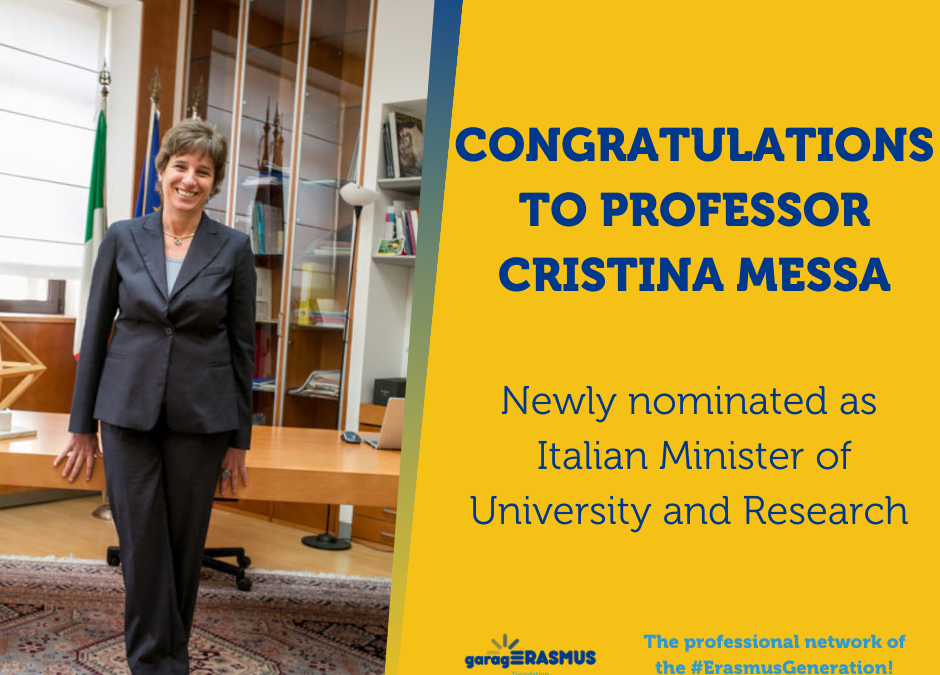
Professor Cristina Messa, former Rector of University of Milano-Bicocca, garagErasmus Foundation member, will be the Italian Minister of University and Research.

GaragErasmus Foundation is glad that a person of such great value has been chosen in this very delicate moment for Italy and for all Europe.

Good luck with your mandate!

_________________

La Fondazione garagErasmus accoglie con favore la notizia annunciata dal Primo Ministro, il professor Mario Draghi.
La professoressa Cristina Messa, ex rettrice dell’Università di Milano-Bicocca, membro della Fondazione garagErasmus, sarà il Ministro Italiano dell’Università e della Ricerca.

La Fondazione garagErasmus è lieta che sia stata scelta una persona di così grande valore in questo momento così delicato per l’Italia e per tutta l’Europa.

In bocca al lupo per il Suo mandato!

The new Erasmus+ programme will be more inclusive, more international, more digital and greener, and will intend at mobilising all sectors for economic recovery and growth.

There will be no structural changes with regards to the previous term, keeping the same division into key actions ans sectors. The new programme aims at these major milestones:

• New opportunities for European learners, starting at school; with greater accessibility and more flexible mobility formats, the new Erasmus+ will provide opportunities for a more diverse group of learners, including those with disadvantages;
• The possibility for students in VET to have experiences outside Europe;
• The introduction of “mixed” mobility, in particular through the use of innovative and high-performance digital tools;
• Green incentives for participants who choose to travel by train or bus rather than by plane and higher participation targets for non-EU countries;
• Promoting innovation in curriculum design, learning and teaching practices
• Promoting green and digital competences
Supporting new flagship initiatives, such as European Universities, Erasmus Teacher Academies, Centres of Professional Excellence and much much more!

The future programme will also focus on inclusion through increased financial support to raise accessibility and awareness among participants with fewer opportunities. Furthermore, it will also promote the incorporation of green practices in all its co-funded projects.
As a next step, the legal adoption of the MFF package along with the ratification of the Own Resources Decision is now urgently needed. Once adopted, the EU’s long-term budget, coupled with the NextGenerationEU initiative, will be the largest stimulus package ever financed through the EU budget. A total of €1.8 trillion* will help rebuild a post-COVID19 Europe.

Stay tuned for concrete updates soon!

The strong commitment to European cooperation and public investment demonstrated by its proposed allocation of 1.1 trillion euros, along with 750 billion euros for recovery instrument NextGenerationEU, is a positive sign for the future of Europe. Addressing the social and economic impact of the COVID-19 crisis, as well as the green and digital transitions, certainly requires ambitious public investment. In this regard, Europe cannot afford to leave people behind by failing to adequately channel such investment into funding programmes which have a tangible and positive impact on their lives while also helping to tackle the above challenges and contribute to the EU’s recovery. However, compared to the Commission’s original proposal from 2018, the revision surprisingly reduces the allocation to such programmes.

Set up in 2015 by the Lifelong Learning Platform and European Youth Forum, the Erasmus+ Coalition is an informal alliance of civil society and stakeholder organisations -including garagErasmus- with extensive experience in working with Erasmus+ and previous generations of the programme. Both organisations, together representing all categories of programme beneficiaries, coordinate dialogue between the EU institutions and civil society organisations across Europe. The Coalition meets regularly to discuss issues of common concern in the implementation of the Erasmus+ programme.

Stay Connected!

Follow us on social media and be part of the journey — updates, opportunities, and Erasmus vibes await!